Build callback reliability before you think about networking
Accept only assignments you can realistically work, arrive by the required report time, and cancel through the approved system as early as possible when an emergency prevents you from coming. Front offices remember substitutes who reduce uncertainty. A brilliant lesson does not compensate for a school wondering at 7:45 whether the adult assigned to the room is coming. District booking systems and cancellation rules differ; a late cancellation or no-show may affect your eligibility or standing under local policy, so check the staffing office’s rules and use its reporting process.
Keep your profile, phone number, credentials, and availability current in the district substitute system so offices can reach you through the proper channel.
Return materials, stack collected work clearly, reset chairs and tables, erase only what should be erased, and leave the teacher a concise note. Do not reorganize cabinets, throw away student work, or redesign systems because you prefer another setup. The regular teacher should be able to walk in the next morning and understand what happened.
Small care signals professionalism: cap markers, plug in borrowed devices if instructed, report broken equipment, and make sure confidential papers are not left in view.
Write notes that help the teacher teach tomorrow
Organize by class. State what the class completed, where the lesson stopped, who needed office help, what work was collected, and any factual incident that requires follow-up. “Third period was awful” is not useful. “Students completed questions 1–8; questions 9–12 were not reached; two students were referred after repeated harassment despite redirection” gives the teacher something to act on.
Separate minor behavior from important follow-up. A list of every whisper makes the real issue harder to see.
Know the people who make the building run
Learn the names and roles of office staff, instructional assistants, custodians, department leads, and administrators. Be courteous without turning those relationships into gossip channels. The office may help with a missing key; the para may explain the student’s established routine; the custodian may tell you how the room is secured. Respect makes repeat assignments easier.
Ask local questions instead of pretending. Schools prefer a sub who checks a dismissal procedure over one who confidently invents it.
Callback reputation checklist
- Be reliably early and cancel only through the approved system so the office is never guessing whether you will appear.
- Leave the room orderly and the teacher a note that is specific enough to use the next morning.
- Learn the names of office staff, custodians, instructional assistants, and administrators without overfamiliarity.
- Accept a range of grades or subjects only when you can still supervise safely and follow the lesson plan.
- Mark preferred schools in the substitute system and track where you worked well.
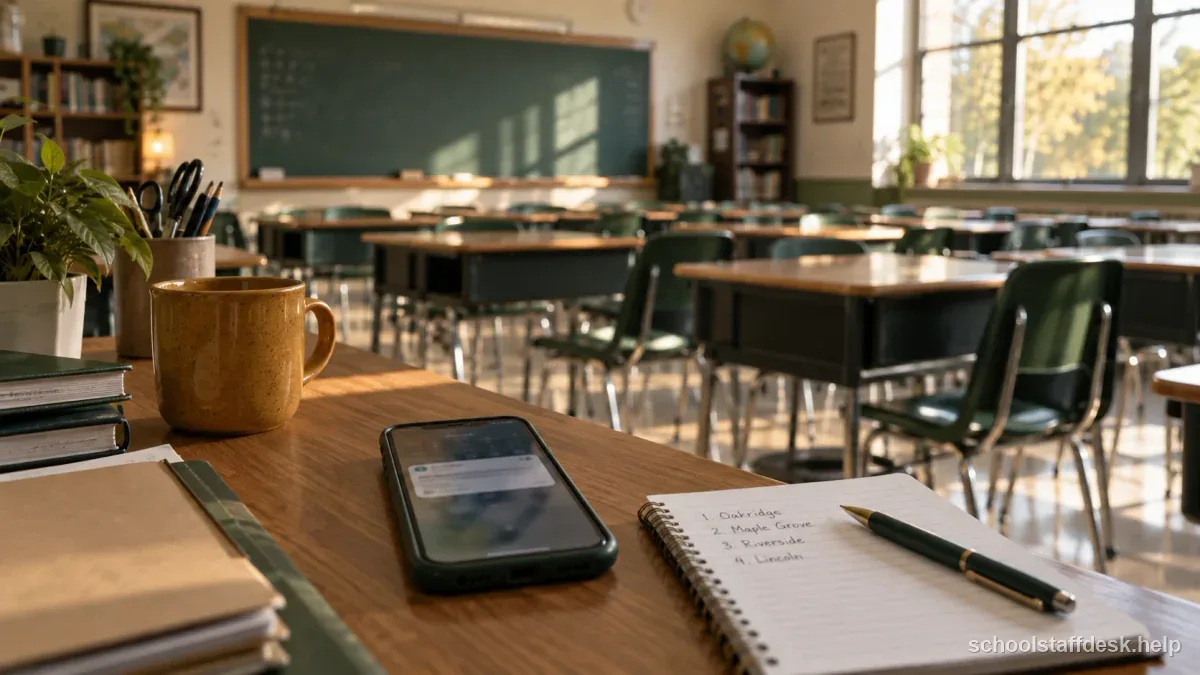
Build a small portfolio of schools where you work well
Track the schools, grade levels, start times, parking rules, office locations, and subjects where you feel effective. Mark favorites in the substitute platform if it supports that feature. If a school tells you how to be added to a preferred list, follow that process rather than asking teachers to bypass district assignment rules.
Over time, familiarity lowers the hardest part of substituting: every building no longer feels new. You know the bell schedule, emergency language, office expectations, and common routines before the students arrive.
Turn the day into a callback record without crossing professional boundaries
Office staff notice whether you arrive early enough to be ready, follow sign-in and key procedures, answer the assignment phone, handle schedule changes without drama, and return materials at the end of the day. Teachers notice whether the room was left usable, the work was actually attempted, and your note tells them what happened without turning into gossip. Students notice whether you are calm and predictable. None of those requires a charismatic performance.
Write the end-of-day note in four parts: what was completed, what was not completed, positive student contributions worth recognizing, and incidents or support contacts stated factually. If an incident was formally handled by the office, note that briefly and use the school’s documentation process instead of retelling sensitive details in an unsecured paper note.
Track where you fit. Some substitutes are excellent in primary classrooms and miserable in large middle-school groups; others are the reverse. Building a preferred list around grade bands, subjects, commute, school routines, and staff support can improve both performance and consistency.
Reliability also includes saying no to an assignment you cannot cover safely or competently. If the job requires a certification, physical task, medical procedure, or specialized support you have not been trained for, contact the staffing office rather than hoping to improvise. Preferred substitutes are valuable because schools can trust their judgment, not because they accept every possible assignment. Follow the mandated-reporting law, required training, and reporting route that apply in your state and district; temporary status does not itself answer who is a mandated reporter or how a report must be made.
Keep a private, nonstudent-specific assignment log after each job: school, grade or subject, date, whether the plan was complete, which office contact helped, and whether you would accept that assignment again. Do not record confidential student details in a personal file. The log is for your own reliability and fit decisions. After several weeks, patterns become visible: buildings where the handoff is organized, grade bands you manage well, and days you should leave open for preferred schools. That is more useful than accepting every notification and hoping administrators remember you.
Do not post student stories or classroom photos on social media, accept inappropriate student contact outside approved channels, complain about staff in the lounge, or discuss confidential student information to appear knowledgeable. A school requesting you by name is trusting your judgment as much as your classroom management.
If you hope to be considered for long-term or permanent work, treat each day as a complete professional assignment: preparation, instruction, supervision, documentation, and a clean handoff.
- After a shiftKeep a private log of school, grade or subject, and how the assignment fit.
- After several weeksLook for patterns in building routines, grade bands, and staff support.
- Before the next bookingUse those patterns to decide which assignments you can cover well.
Sources used for this guide
- Knox County Schools — Substitute Teacher Handbook
- Plano Independent School District — Substitute Handbook
- STEDI — Becoming Requested as a Substitute Teacher
Rules can change. Use these sources as a starting point and confirm any state, district, student-plan, employment, licensing, or retirement requirement with the agency or team that governs your situation.
Questions school staff ask about this situation
What makes a school request a substitute again?
Reliability, calm classroom management, useful teacher notes, respect for school procedures, and leaving the room organized consistently matter more than trying to impress students with novelty.
Should I ask teachers to request me directly?
You can let staff know you enjoyed the assignment, but use the district’s approved preferred-sub or booking process rather than asking people to bypass scheduling rules.
What should I track about schools I like?
Keep non-confidential notes on report time, parking, office location, grade levels, subject areas, and your own fit. Do not keep student information in a personal school list.
Can substitutes post about their day on social media?
Avoid student-identifying stories, photos, confidential information, and workplace gossip. Follow district social-media and privacy policies even when the post is made off duty.