Definitions you have to get right
Federal education guidance describes physical restraint broadly as restricting a student's ability to move the torso, arms, legs, or head freely, and seclusion as involuntarily confining a student alone in a space they cannot physically leave. The details and exceptions in state law and district policy may differ. Brief contact to guide or comfort a student may be treated differently, but staff should use the definitions in the rules that govern their school.
Mechanical and medication-related practices have separate definitions and exceptions, including possible medical or therapeutic uses. Do not decide whether a device, medication, timeout, or sensory space counts by its label alone. Use the current state definition and district policy; whether an event meets a definition can trigger reporting, family notification, and review duties.
The one condition that can justify physical restraint
The U.S. Department of Education says restraint or seclusion should be used only when a student's behavior poses imminent danger of serious physical harm to the student or others, after less restrictive interventions have been ineffective or are inappropriate. That is federal guidance, not a single nationwide school restraint statute. State laws and district rules set the binding details and may be stricter; follow the standard that applies at your school and stop an intervention as soon as the immediate danger has passed.
Refusing work, cursing, leaving a seat, or general disruption alone should prompt support and de-escalation, not an improvised hold. If there is no immediate safety emergency, call the designated team, move others away if safe, and follow the student's support plan and district procedures.
What is never allowed
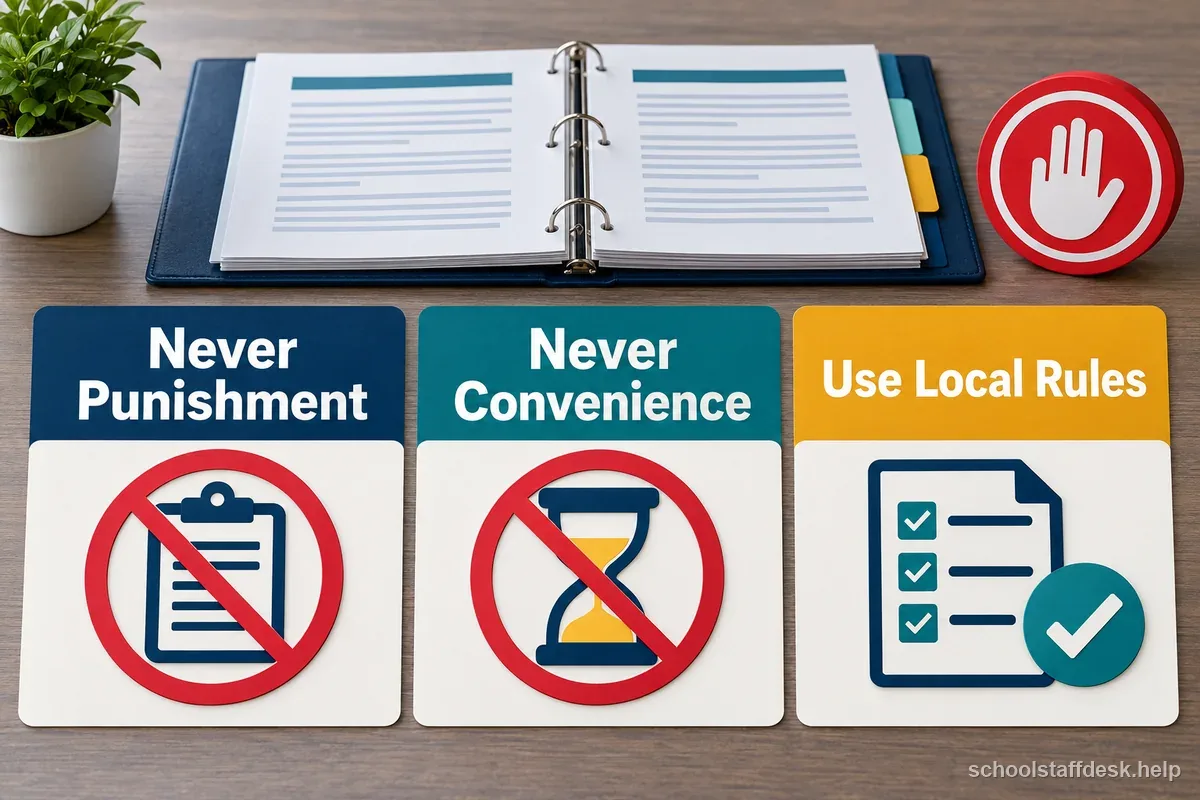
The Department's guidance rejects restraint or seclusion as punishment, discipline, coercion, or staff convenience. Prohibited holds, monitoring rules, and room requirements vary by jurisdiction; never assume a technique is allowed because a colleague used it or because it appears in a plan. Some states prohibit practices that others regulate differently.
Disability-related obligations also matter. An IEP, behavior plan, or emergency plan must be implemented consistently with governing law and district policy; it does not authorize an otherwise prohibited practice. Ask the case manager or administrator how the plan fits the school's current crisis procedure before an incident occurs.
Training is required and does not replace prevention
Training requirements and who may intervene are set locally and by state law. Ask your supervisor which approved training applies to your assignment, when it expires, and what staff who are not trained should do. If you are not trained and authorized, summon the designated response team, protect bystanders when it is safe, and do not improvise a physical technique.
Training supports prevention and a coordinated response; it is not permission to use a hold. The Department emphasizes proactive, individualized supports and de-escalation. Repeated incidents should prompt a review of triggers, staffing, environment, and the student's plan with the appropriate team.
Documentation and parent notification
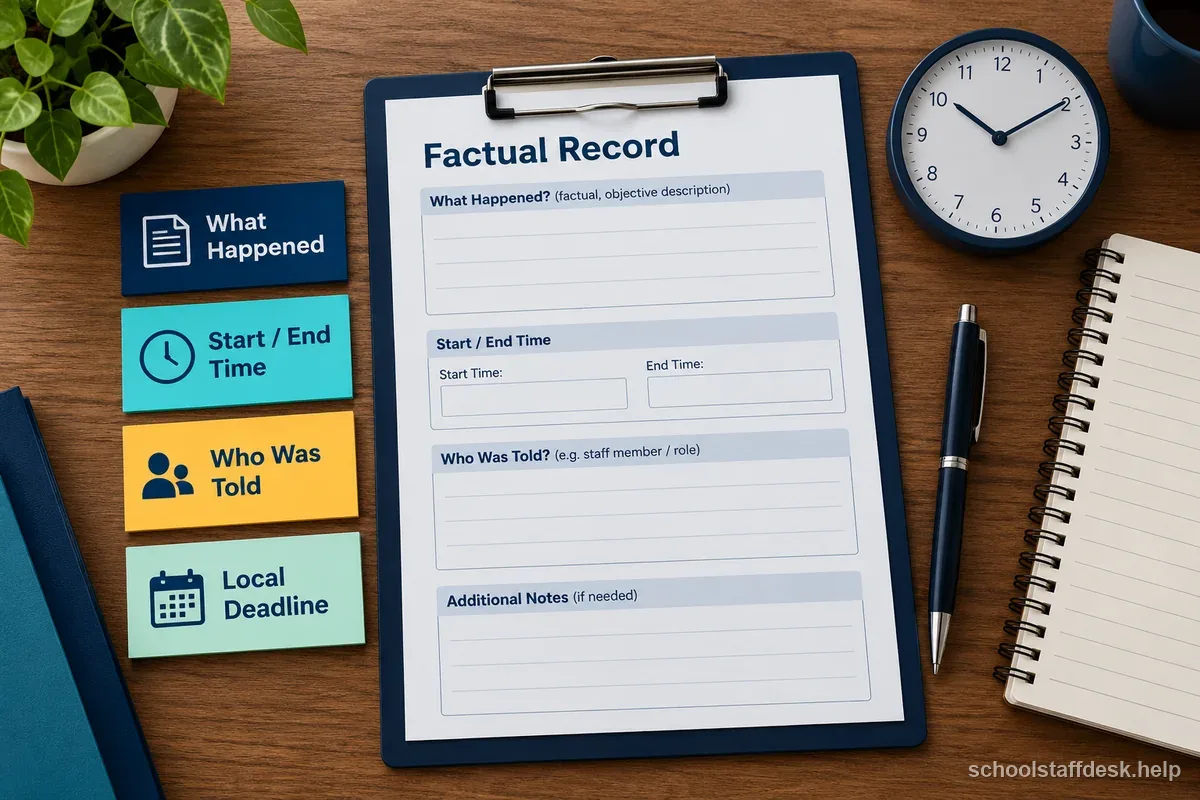
Record and report an incident using the required form and deadline in your state and district rules. A useful factual record includes what happened beforehand, the safety concern, steps tried, who was present, start and end times, the intervention used, monitoring, injuries or medical checks, and how the student was released. Family notification, written notice, and review deadlines differ by jurisdiction, so do not rely on a nationwide number of days.
Follow the school's debrief and reporting process, and correct the record if you notice a factual error. The review should identify prevention steps and whether the support plan, environment, or staff training needs attention. If an incident is not being documented as required, report that through the designated administrator or compliance channel.
Immediately after any restraint or seclusion incident
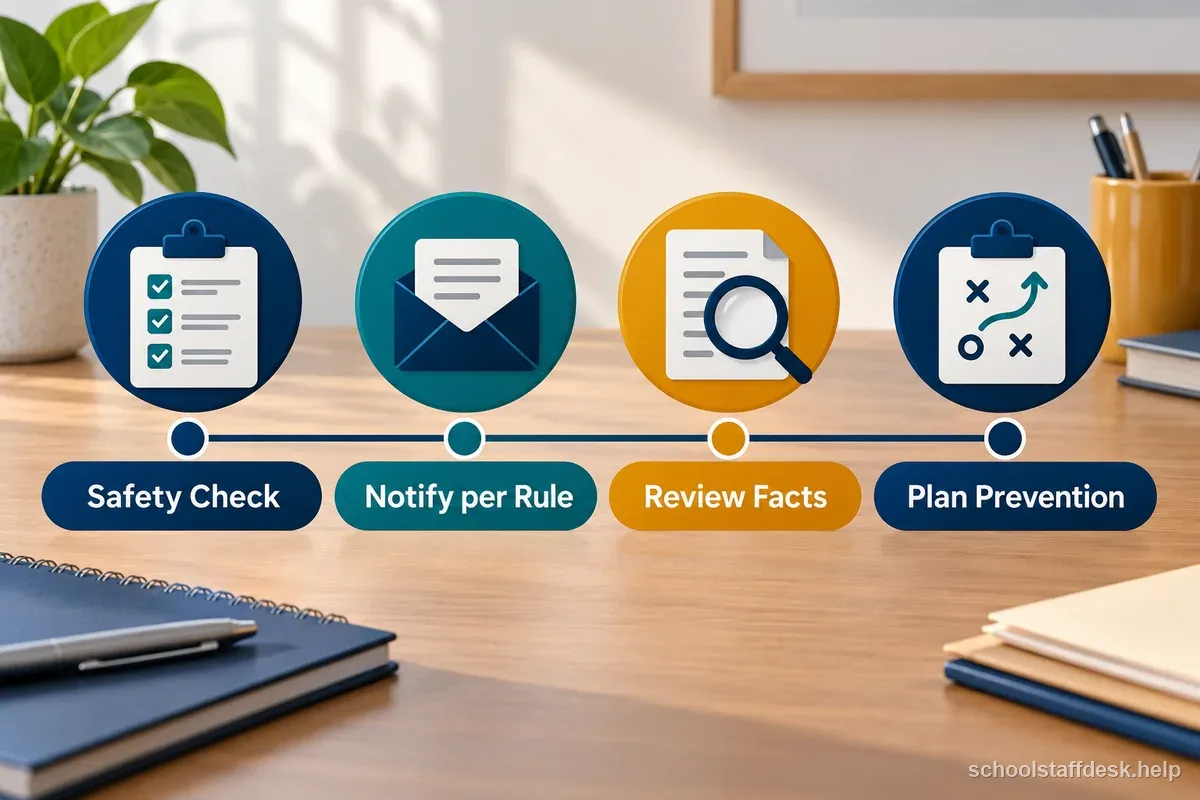
- Follow the response protocol to check safety, arrange medical attention when indicated, and end the intervention as soon as allowed under the governing rule.
- Complete the required incident record by the deadline in state law and district policy, including the event timeline and response.
- Notify the designated administrator and follow the applicable family-notification and written-notice requirements.
- Request a debrief that reviews what happened and whether a behavior plan or classroom setup needs to change.
- Check that your own crisis-prevention training is current if you are assigned to a setting where incidents are foreseeable.
Federal guidance, state law, and where to find your rule
There is no single federal statute setting one complete restraint-and-seclusion code for every school. Federal disability and civil-rights laws still apply, and the Department of Education has issued guidance, including a January 2025 letter and a resource document with prevention principles. State law and district policy supply many operational details: definitions, allowed and prohibited techniques, staff qualifications, parent notice, reporting, and review. Do not rely on a national summary for a deadline or assume every state has the same restrictions.
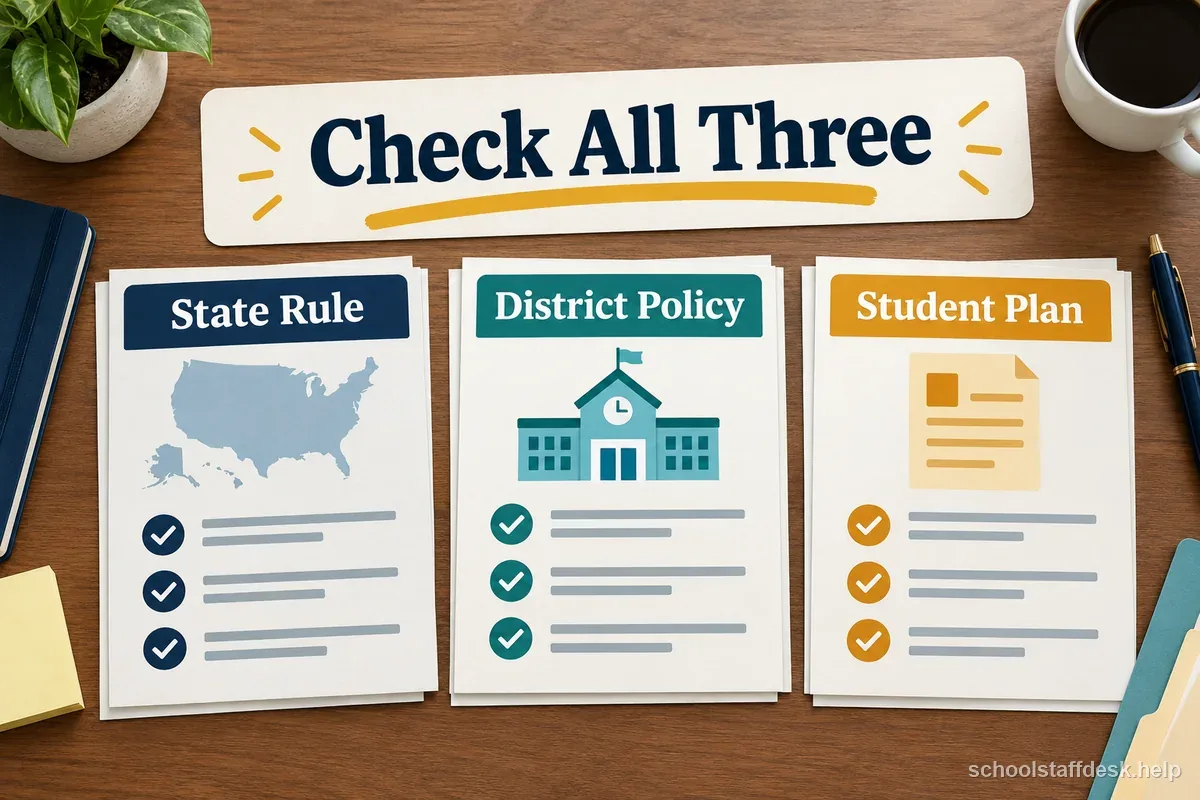
Find three documents and keep them where you can reach them: your state’s restraint and seclusion statute or regulation, your district’s policy and incident form, and, if you support a student with a behavior plan, that plan’s crisis section. Read them before the school year gets busy. The worst time to learn the rule is while an incident is in progress.
- Early escalationReduce the audience, use one calm voice, give space, and offer acceptable choices.
- While help can arriveSummon trained staff and clear the area; do not improvise a hold if untrained.
- Only at imminent dangerTrained staff may use a permitted intervention if less restrictive steps fail or are inadequate.
- When danger passesStop the intervention and follow the required safety, documentation, notification, and review process.
The minutes before a hold becomes likely
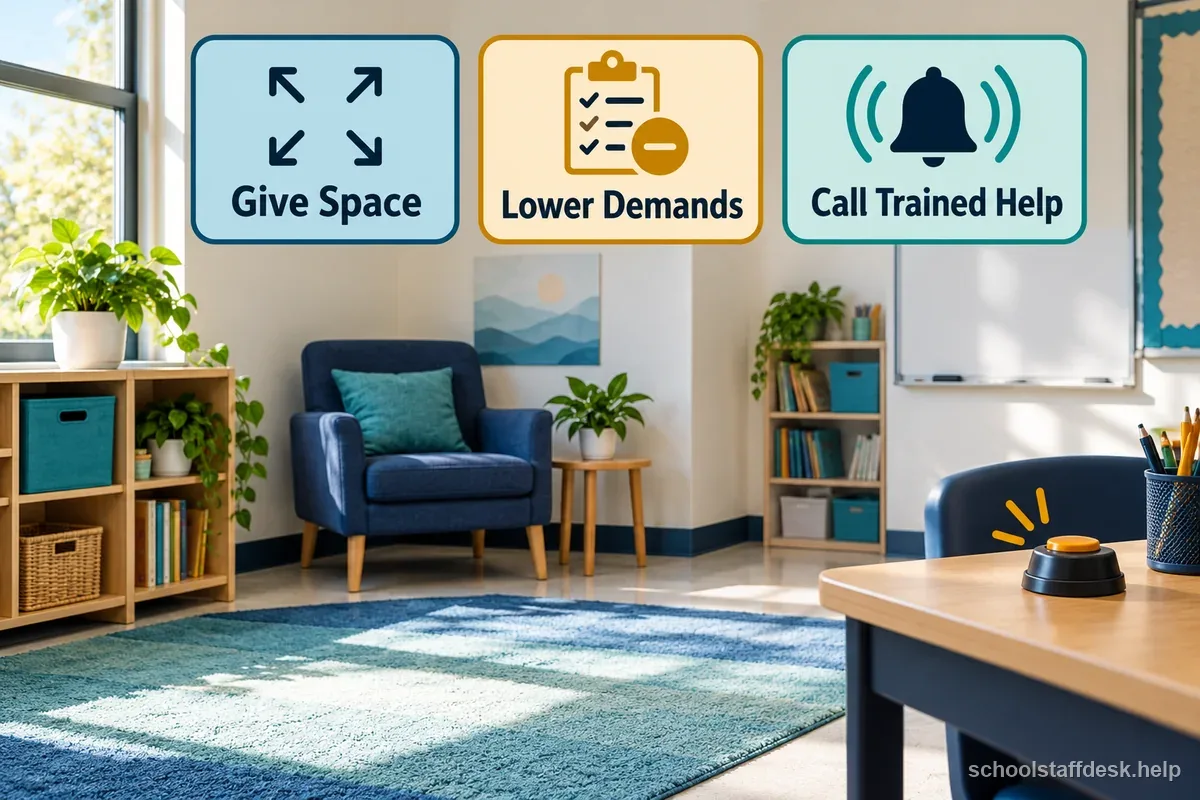
Most incidents that end in restraint were preventable earlier, and federal guidance is explicit that prevention comes first. When a student is escalating, shrink the audience: send other students to another room or a corner activity, and reduce the number of adults talking to one calm voice. Lower your volume, give physical space, stop issuing non-essential demands, and offer two acceptable choices rather than a single instruction. Ask for trained help early, while there is still time for it to arrive, instead of waiting until the situation is already dangerous.
Distinguish escalating behavior from an immediate safety emergency. Early escalation is a time to reduce demands, offer space, and request help. If a serious and immediate danger arises, only staff authorized under the applicable rules should act, using the least restrictive permitted response and ending it when the danger passes. Follow the required re-entry, family communication, and review procedures afterward. Recurring incidents call for a team review of prevention and support, not faster or more frequent restraint.
Sources used for this guide
- U.S. Department of Education — Secretary's Letter on Restraint and Seclusion (January 2025)
- U.S. Department of Education — Seclusions and Restraint: Statutes, Regulations, Policies and Guidance
- National Association of State Directors of Special Education — Policy Positions
Rules can change. Use these sources as a starting point and confirm any state, district, student-plan, employment, licensing, or retirement requirement with the agency or team that governs your situation.
Questions school staff ask about this situation
Can I physically stop a student who is refusing to leave my classroom?
Refusal by itself is not the safety emergency described in federal guidance. Call the designated support team, keep the student and others safe, and follow district policy. State law may set additional requirements.
Does a behavior intervention plan let staff use a hold that state law prohibits?
No. A plan cannot override applicable law or district policy. Ask the case manager or administrator to resolve any conflict before a crisis occurs.
I am not trained in crisis intervention. What is my role in a crisis?
Summon trained staff immediately, move other students away, remove hazards, and keep talking calmly to the student. Do not attempt a physical hold you have not been trained and authorized to perform.
How fast do parents have to be told?
There is no single nationwide deadline. Follow your state law and district procedure for both the timing and format of family notice.