
Separate contract length from paycheck distribution
A contract that covers a school-year service period does not necessarily mean the employee receives only that number of checks. Some employers distribute contract earnings over additional months, while other systems use a different arrangement. Treat the work term, annual salary, pay dates, and summer distribution as four separate facts and verify each in the written offer or employee handbook.
State and local rules differ. For example, Texas publishes separate installment amounts for a 10-month contract paid over 10, 11, or 12 months, and North Carolina law describes certain 10- or 11-month employees being paid in 12 monthly installments on request. These are state examples, not a nationwide rule. Ask your district payroll office which policy applies to your job and bargaining agreement.
Compare gross salary before looking at the deposit
Start with the annual salary stated in the contract, then identify the number of installments and the gross amount per installment. A simple comparison can show how a fixed contract amount is distributed: dividing the same earned salary across more pay dates generally makes each gross installment smaller, while deposits continue for longer. Confirm whether the schedule includes any extra-duty pay, stipends, or adjustments separately.
Net pay can differ for reasons beyond the number of checks: federal and state withholding, retirement contributions, insurance premiums, tax elections, benefits, and voluntary deductions. Do not conclude that a 12-month option reduces the annual salary simply because the monthly deposit is lower. Compare the year-to-date gross and deductions on the pay stub and ask payroll to reconcile any amount that does not match the contract.

Ask what happens to summer pay when employment changes
If you resign, transfer, take unpaid leave, or end employment before the final scheduled check, ask how earned wages and any deferred installments are handled. The answer may depend on the contract, state wage law, district policy, payroll cutoff, and the dates of service. Get a written explanation before assuming that a summer deposit is new pay or that it will automatically continue after separation.
Ask for a sample final-pay calculation showing the work period, gross salary earned, amounts already paid, outstanding balance, deductions, and expected dates. If the district withholds a portion of pay for later installments, learn whether it is recorded as earned compensation or processed another way under local rules. Direct questions about a disputed wage amount to payroll or the appropriate employee representative rather than relying on a colleague's experience.
Read the paycheck calendar and build a summer cash-flow plan
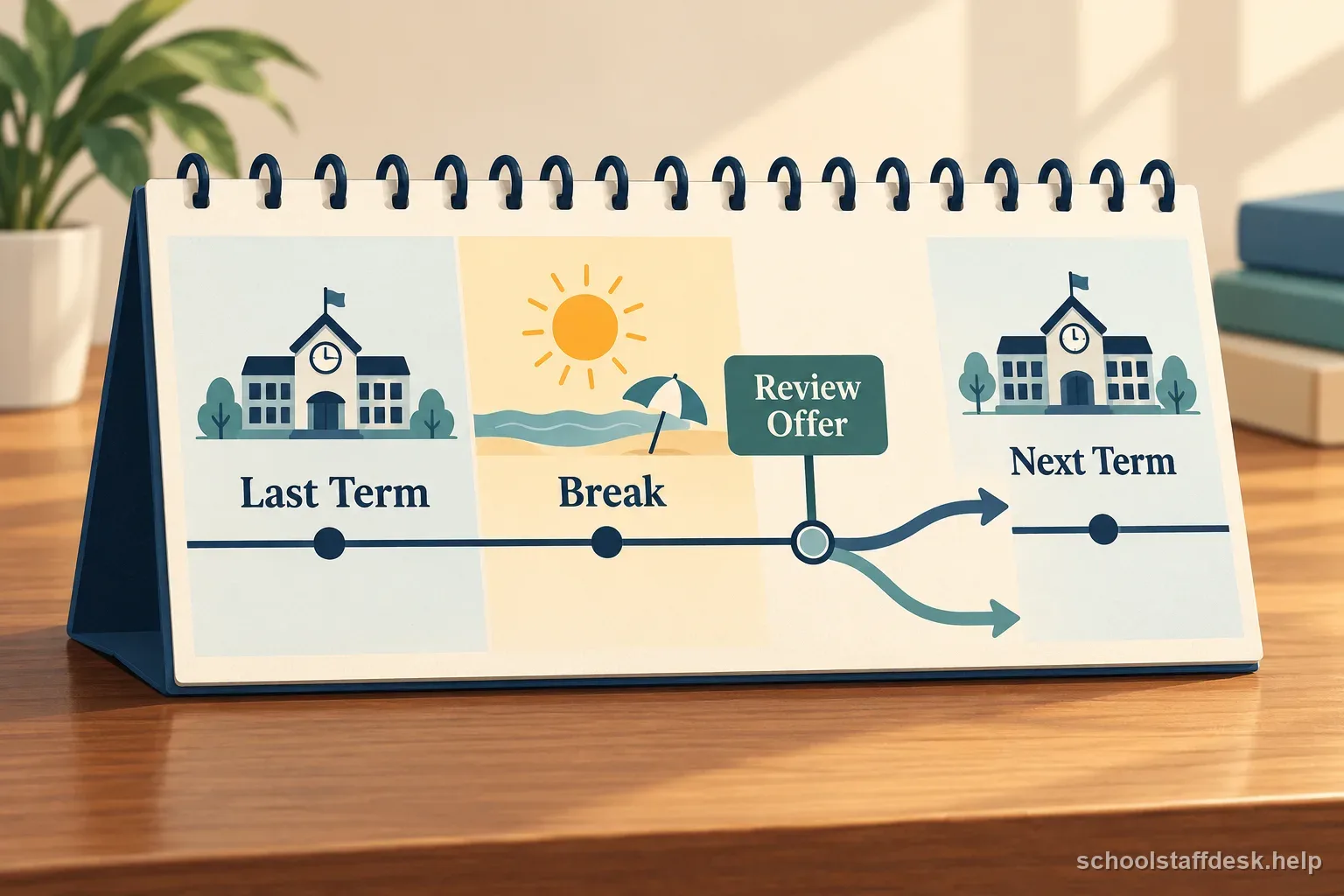
Map each expected deposit against rent, utilities, insurance, loan payments, and school-year expenses. Mark the last regular payday, any summer pay dates, and when benefits or payroll deductions change. If the 10-month option leaves a summer gap, divide the expected net amount by the number of months it must cover and set aside funds from each deposit. If the 12-month option spreads payments, use a budget that reflects the smaller recurring amount.
Keep the plan conservative until you confirm the first and last payroll dates. A district may have a processing cutoff, unpaid break, calendar change, or delayed first check. Maintain a separate buffer for unexpected costs and avoid treating an estimated tax refund or optional stipend as guaranteed summer income. Revisit the budget when you receive the final calendar and your first pay stub.
Check withholding and benefits instead of guessing
Review the pay stub for gross pay, federal withholding, state and local taxes, Social Security or Medicare where applicable, retirement, health benefits, and other deductions. Compare year-to-date figures with the pay dates on the calendar. If a withholding amount looks unexpected, use the IRS Tax Withholding Estimator or ask a qualified tax professional; an installment schedule alone does not determine a person's final tax liability.
A change in paycheck frequency can affect how withholding is calculated on each deposit, even if your annual salary is unchanged. Review your Form W-4 elections and other payroll forms after a major household or job change. Use official payroll and tax documents to make decisions, and distinguish tax withholding from retirement contributions or benefit premiums, which follow different rules.
Get written answers before choosing a distribution
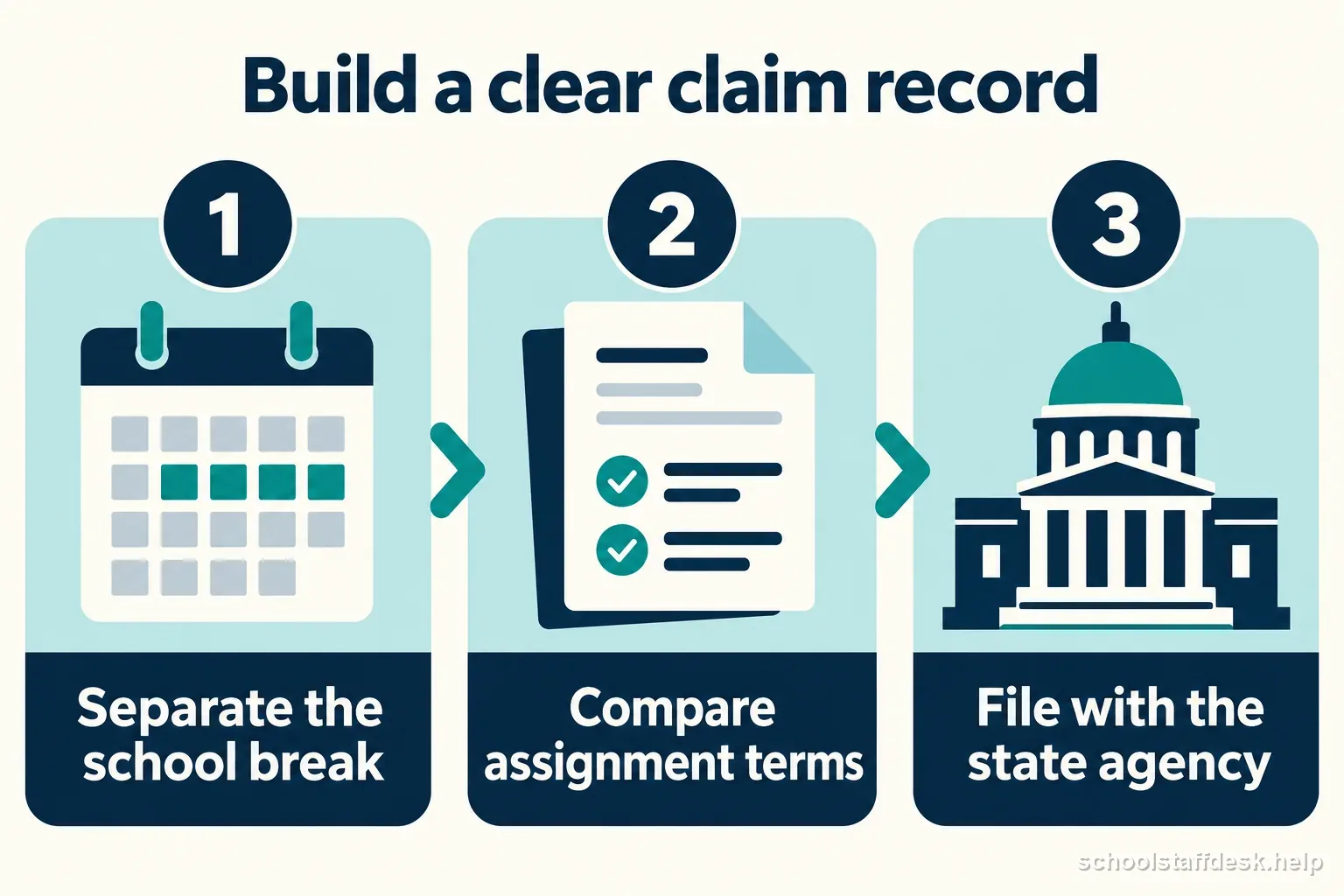
Ask payroll these questions: What is my contract service period? What is the annual gross salary? How many installments will I receive? What are the first and final pay dates? Is the summer amount deferred contract pay? How are extra duties, deductions, and separation handled? Request the applicable policy or agreement section so you can compare the answer with your offer.
Save the signed contract, salary schedule, payroll calendar, benefits elections, and written payroll responses together. When a new schedule is offered, compare the annual gross, deposit dates, benefits deductions, and final-pay rules rather than choosing by one monthly amount. If a collective bargaining agreement covers the position, consult its compensation language or the representative identified by the district. This gives you a dependable planning basis without assuming that another district's payroll model applies to yours.
Pay-schedule questions to verify
| Item | 10-month distribution | 12-month distribution |
|---|---|---|
| Annual contract salary | Confirm the gross amount | Confirm the same contract amount |
| Pay dates | Usually concentrated in contract months; check calendar | May continue through summer; confirm first and last checks |
| Summer cash flow | Plan for the period without scheduled deposits | Budget for smaller installments spread across more months |
| Separation or transfer | Ask payroll for earned balance and final-pay timing | Ask how deferred installments and deductions are reconciled |
Sources used for this guide
- Teacher Retirement System of Texas, 2026-27 State Minimum Salary Schedules
- North Carolina General Statutes § 115C-316
- Internal Revenue Service, Tax Withholding
Rules can change. Use these sources as a starting point and confirm any state, district, student-plan, employment, licensing, or retirement requirement with the agency or team that governs your situation.
Questions school staff ask about this situation
Does 12-month teacher pay mean a higher salary?
Not necessarily. It may distribute contract earnings over more pay dates. Compare the annual gross amount in the contract and ask payroll to explain the installment schedule.
Do teachers get paid during summer?
It depends on the employer's pay distribution, contract, and payroll calendar. Check the written offer and ask whether summer deposits are installments of school-year earnings.
What happens to summer pay if I leave the district?
Ask payroll for a written calculation of earned salary, prior payments, outstanding balance, deductions, and final-pay timing. State law, contract terms, and district procedure may affect the answer.
Can a 12-month pay schedule change my taxes?
Pay dates affect withholding on individual checks, but they do not alone determine your final tax liability. Review your pay stub and use current IRS guidance or a qualified tax professional for tax questions.