
Open the state portal and identify the exact certificate first
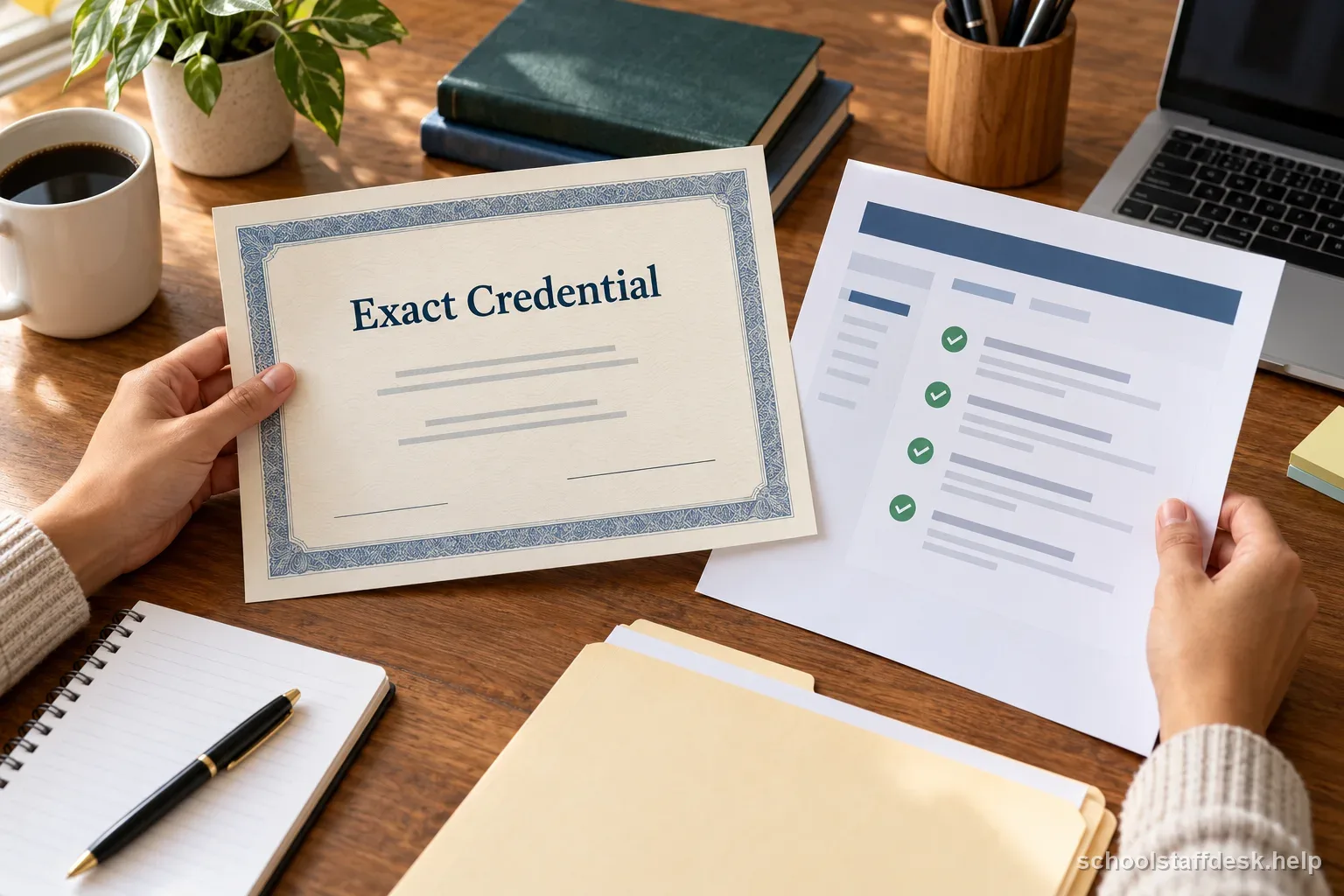
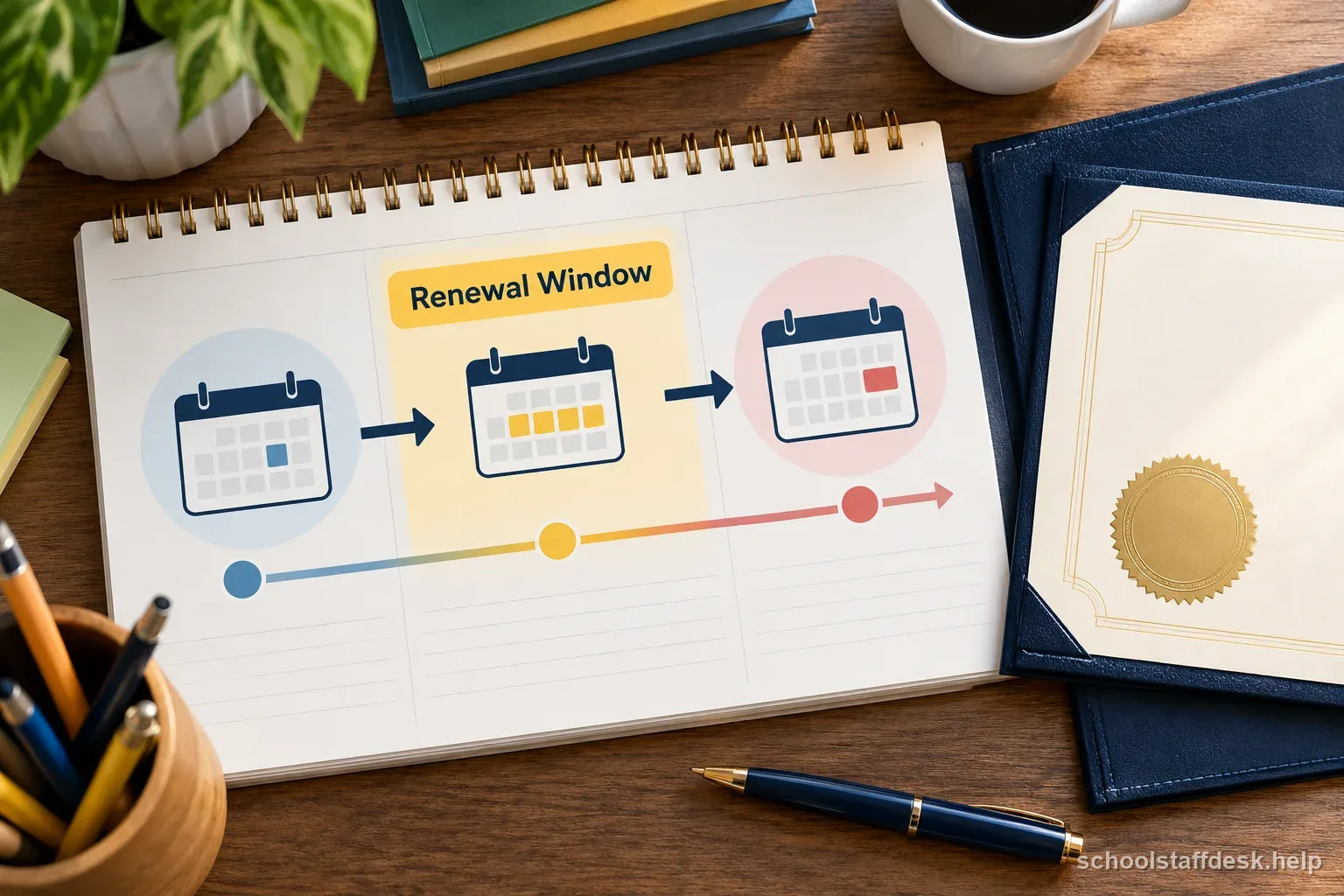
Teacher-license renewal begins with the document, not with a colleague’s memory. Record the certificate type, endorsements, expiration date, renewal window, professional-learning requirement, fees, and any status conditions shown by your state agency. States use different certificate levels and renewal cycles; some require clock hours, some require university credit or coursework, and others use professional-development points. The label on your certificate determines which applies.
Do not assume that 'five years' is a national cycle. It is a common pattern in some states, but the number and the required professional learning are state-specific and can change.
Texas is a useful concrete example—not a universal rule
As of October 2026, the Texas Education Agency says a Texas Standard Certificate is subject to renewal every five years. TEA lists 150 continuing professional education hours for classroom teachers and 200 hours for several other certificate categories; multiple listed certificate types may have a 200-hour total under its rules. Texas also limits eligible providers and activities, requires educators to retain supporting records for five years, and applies a late fee after expiration. Check the current TEA page for requirements tied to your certificate type.
Those numbers belong to Texas Standard Certificates. A teacher in California, New York, Florida, or another state should not copy them into a personal renewal plan.
Illustrative count: if the Texas portal and accepted records confirm 108 eligible hours toward a classroom teacher’s 150-hour requirement, 42 remain (150 minus 108). The remaining hours still need to meet the current provider and topic rules.
Illustrative cap check: TEA allows independent study for up to 20% of total hours. For a 150-hour classroom-teacher requirement, that is 30 hours. If a log lists 36 independent-study hours, do not count the extra six toward that cap; confirm eligible categories with TEA before filing.
Separate 'useful PD' from 'renewal-eligible PD'
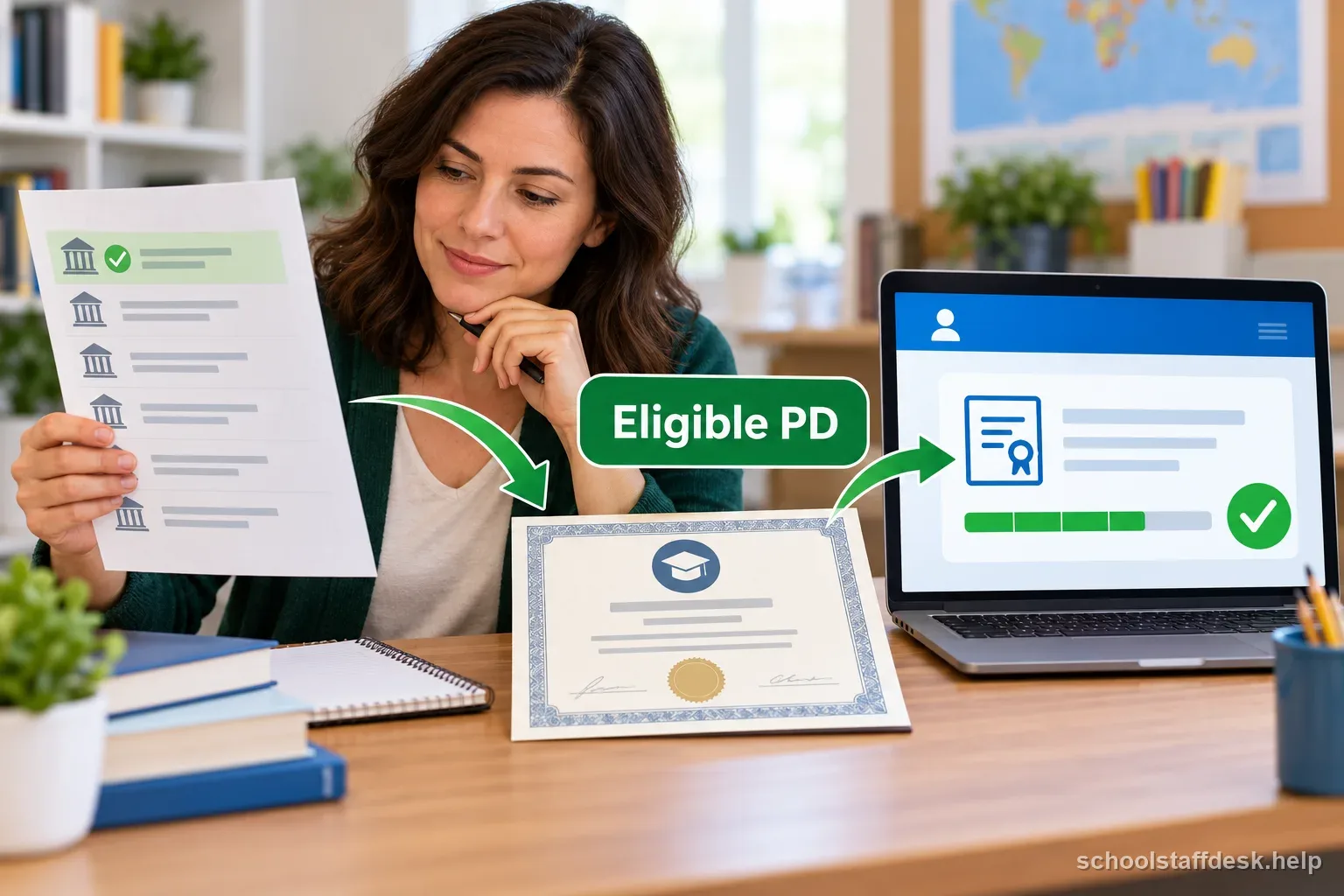
A workshop can improve your teaching and still fail to meet a state renewal rule. Check approved providers, subject categories, college-credit conversion, limits on independent study, mentoring, presenting, or other activity types, and any mandatory content. Verify before spending money or accumulating dozens of hours you assume will count.
If your district tracks professional learning separately from the state portal, reconcile the two. District completion does not automatically mean the state has credited the activity.
Why “teacher renewal” cannot be one national checklist
| Question | Texas Standard Certificate example | California teaching-credential example |
|---|---|---|
| What document are you holding? | A Texas Standard Certificate has its own renewal/CPE framework. | A Preliminary/Level I credential and a Clear/Level II credential are not the same stage. |
| Can you assume every five-year document is simply renewed? | No—verify the exact certificate and TEA requirements. | No. CTC states that Preliminary/Level I credentials are not renewable and must be upgraded/cleared; qualifying Clear credentials are renewed. |
| Professional learning | TEA currently lists 150 CPE hours for classroom teachers renewing a Standard Certificate, subject to the current rules and certificate type. | CTC states Clear teaching/services credentials may be renewed without additional coursework or service requirements; preliminary holders must satisfy the requirements to clear the credential. |
| What should you save? | CPE evidence and the certificate/renewal records TEA says to retain. | Your credential document, listed renewal/upgrade requirements, induction/program evidence where applicable, and the final Clear credential record. |
| Safe takeaway | Use the TEA portal and current renewal page. | Open the actual CTC credential record and determine whether you are clearing a Preliminary credential or renewing a Clear one. |
Turn the state rule into a credential-specific checklist
Use a verified state example to decide what fields belong on your own checklist, not to copy the example’s numbers. Record the exact credential title, expiration date, renewal window, professional-learning amount and categories if any, approved-provider rules, documentation retention, fee, and what happens after expiration. A teacher with multiple certificates or endorsements may have additional conditions.
Preliminary, initial, and professional credentials can follow different paths even inside one state. California illustrates the danger of generic renewal tables: the Commission says five-year Preliminary or Level I teaching credentials cannot simply be renewed; they must be cleared by completing the credential-specific requirements. Clear credentials follow a different renewal process. Read the requirement for the document you actually hold.
Check the official portal at least once a year even when renewal is distant. Name or email changes, new required topics, provider problems, or unposted credits are easier to fix when the deadline is not next week.
When you need the exact renewal rule for the credential you hold, check Teacher Renewal Desk and verify the filing requirement in your state portal before paying or submitting.
Start the evidence file in year one, not in the renewal month
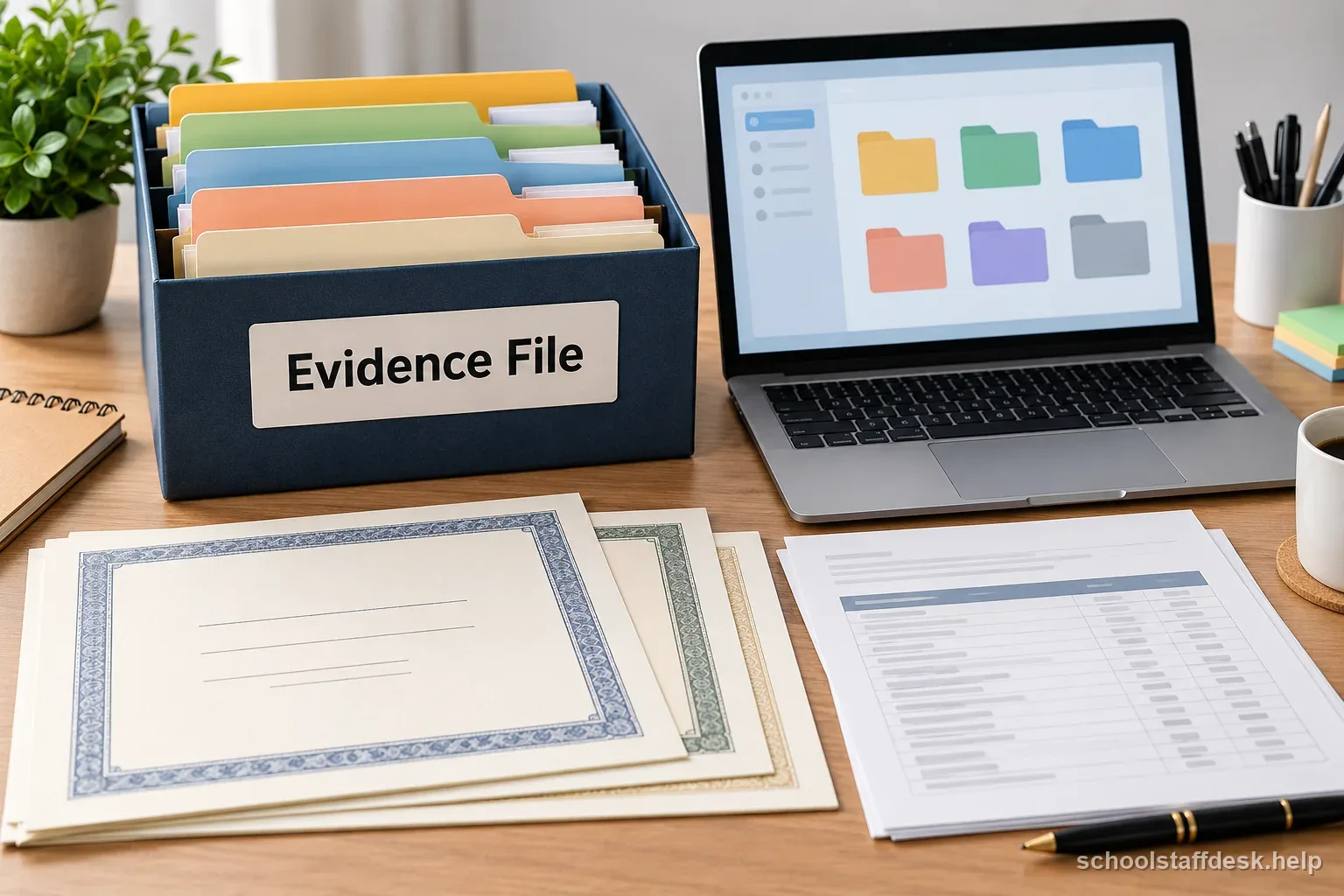
Save certificates, transcripts, provider names or numbers where required, dates, hours or credits, course descriptions, and any category information needed by the state. Keep a simple log that points to the proof document. Do not rely on access to a district learning system you may lose after changing jobs.
Once a year, compare the log to the current state requirement. Rules can change during a multi-year certificate cycle, and catching a missing category early is much easier than fixing it at expiration.
If you hold more than one credential, do not merge the evidence into a single unlabeled pile. A district workshop might satisfy one certificate’s requirement but not another’s, and an endorsement or administrator credential may follow a different rule from a classroom teaching certificate. Give each document a credential tag in your log, then let the state portal—not your filing system—determine what is officially credited.
- Year oneTag evidence to the credential and save certificates or transcripts outside district email.
- Each yearCompare your log with current state categories and portal credits.
- Before renewalConfirm eligibility, documentation, fee, and deadline in the state portal.
- Before any lapseRead the state's expired or reinstatement rules and check employment effects.
| Record | What it supports | Where to confirm |
|---|---|---|
| Credential record | Type, endorsement, current status, expiration | Issuing agency portal |
| Course proof | Date, provider, hours or credit | Certificate or transcript |
| Personal renewal log | Category and source rule for each activity | Current agency requirements |
| Renewal receipt | Application submission and fee status | State account or confirmation |
Know what 'lapse' means before deciding to let a certificate expire
Consequences of an expired or inactive credential vary. A state may allow late renewal with fees or additional steps, or the lapse may affect whether a district can employ you in a licensed position. Do not assume you will simply click renew later with no consequence. Read the state’s inactive, expired, reinstatement, or reactivation guidance before the date passes. For example, TEA says an inactive Texas Standard Certificate may still be renewed after the required CPE, application, and fees; Texas does not require retaking exams solely because the certificate expired. Other states may have different restoration rules.
If you are leaving teaching temporarily, keep your contact information current with the licensing agency so renewal notices and policy changes do not disappear into an old district email.
Renewal planning should also include a deliberate ‘do I still need this credential?’ decision. Educators who hold licenses in multiple states or endorsements they no longer use can spend money and time maintaining credentials with little career value. Before letting one lapse, check whether it affects reciprocity, future reinstatement, current employment, or pension/service issues. The useful system is one calendar showing every credential, while the substantive rules stay separate by state and certificate type.
If your credential became inactive or expired during a longer absence, see returning to teaching after a break for a separate status-first checklist.
Use a state-by-state tool to find the right question, then verify at the agency
A state-by-state renewal resource can help you navigate fifty-one different systems and identify whether you should be looking for hours, credits, endorsements, fingerprinting, ethics training, fees, or other requirements. Use it to find the right question and agency; the final requirement still comes from the licensing authority that issued your credential.
Before submitting a renewal or letting a certificate lapse, confirm the current rule and your personal credential status with the state system that actually issues the license.

Sources used for this guide
- Texas Education Agency — Standard Certificate Renewal and CPE
- California Commission on Teacher Credentialing — Clear Your Credential
- California Commission on Teacher Credentialing — Renewal and Reissuance of Credentials
Rules can change. Use these sources as a starting point and confirm any state, district, student-plan, employment, licensing, or retirement requirement with the agency or team that governs your situation.
Questions school staff ask about this situation
Do all teaching licenses renew every five years?
No. Renewal cycles and credential structures vary by state and certificate type. Five years is common in some systems but not a national rule.
How many PD hours does a Texas classroom teacher need?
As of September 2026, TEA lists 150 CPE hours for renewal of a Texas Standard Certificate held by a classroom teacher. Other Texas certificate categories may have different totals; verify the current TEA page.
Does every district workshop count toward license renewal?
Not necessarily. State rules may limit providers, activity categories, or documentation. Check eligibility before assuming a district activity satisfies a state renewal requirement.
What should I keep for a future renewal audit?
Keep dates, provider information, hours or credits, activity category, certificates or transcripts, and any other proof the state requires. Retention periods also vary, so follow the state guidance.