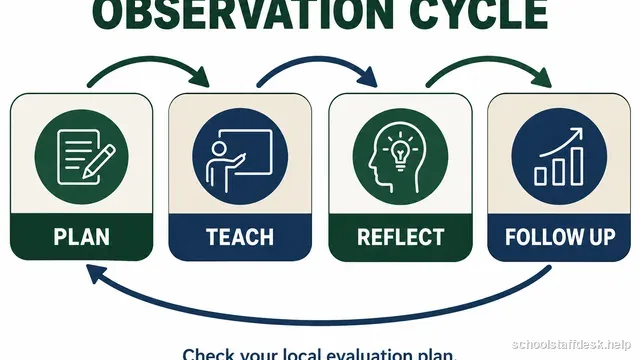
- Get the current planFind the evaluation rubric, calendar, and any agreement that applies to your role.
- Confirm this visitAsk whether it is formal, announced, evaluative, and which criteria are in scope.
- Track the follow-upWrite down conference, report, response, and review steps from local policy.
Observation is a structured process, not a personality test
A formal observation is one part of an evaluation process defined by state rules, district policy, and sometimes a collective bargaining agreement. The number and length of observations, required conferences, scoring, and review steps vary by jurisdiction and may differ for novice, probationary, and experienced teachers. Get the current local evaluation plan and calendar before assuming what will happen.
If a rubric is used, review how the policy says evidence is collected and matched to its criteria. In a conference, ask which rubric element a comment relates to and what evidence supports the rating. Keep notes and use the district's written process if you need to correct a factual error or respond to a score.
Before you plan the lesson, turn the evaluation calendar into a one-page process map. Note who observes, which visit type is scheduled, how evidence is recorded, what conference follows, and where response rights are explained. A mentor can describe common practice, but the current written plan controls. If two documents conflict, ask the evaluator or HR contact which one governs your assignment and save the written answer.
The framework your district uses shapes everything
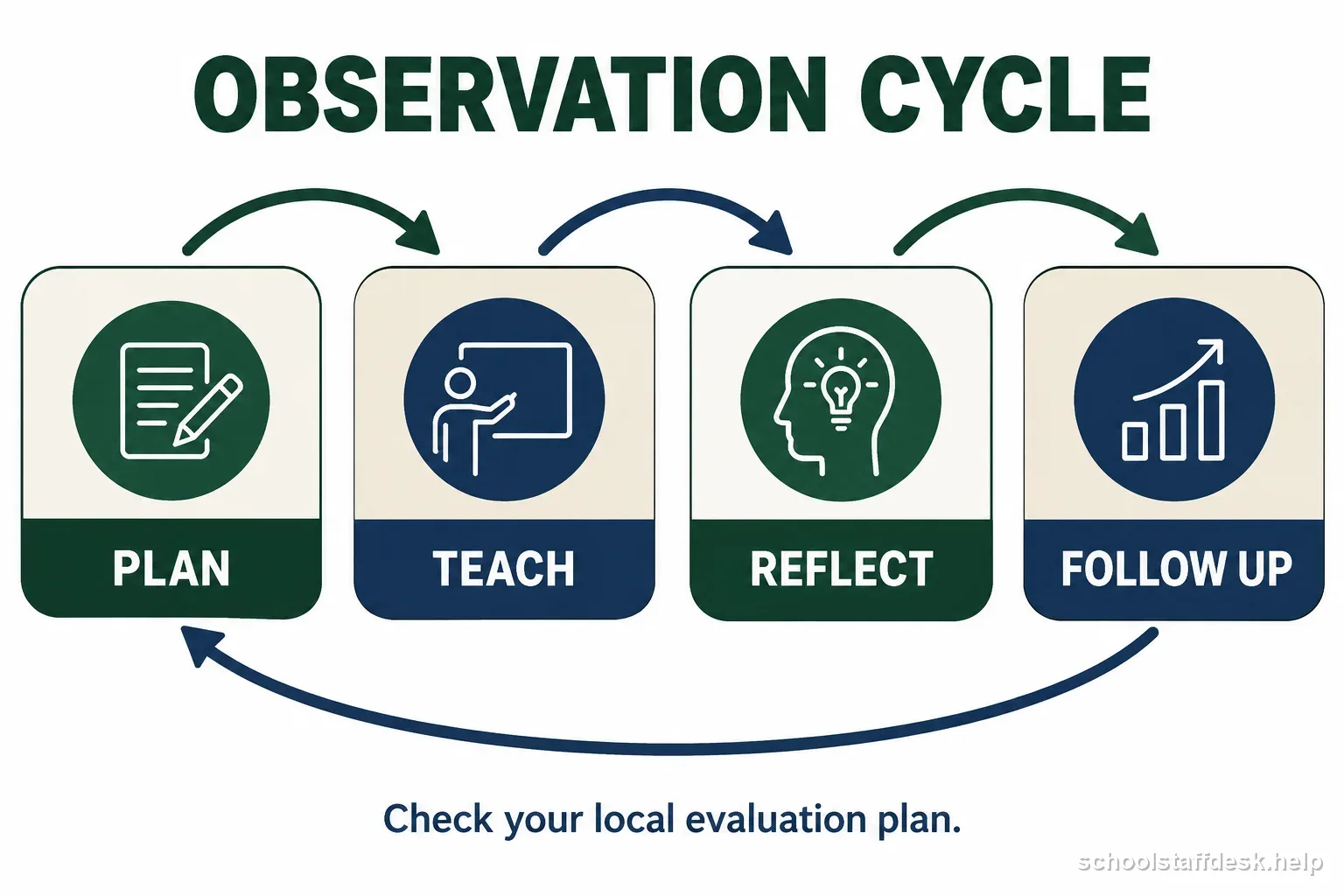
Your district may use a state rubric, a locally adopted framework, or different tools for different types of observations. Do not assume it uses Danielson, Marzano, or a particular set of domains because nearby districts do. Request the exact rubric and evaluation plan, identify which components apply to this visit, and check whether the pre-conference is required and when it must occur.
Read the descriptors for the relevant rating levels and make sure you understand how the plan treats lesson artifacts, student work, and context. The goal is to know the criteria and process rather than stage a lesson around a rubric summary that may not match your district's adopted version.
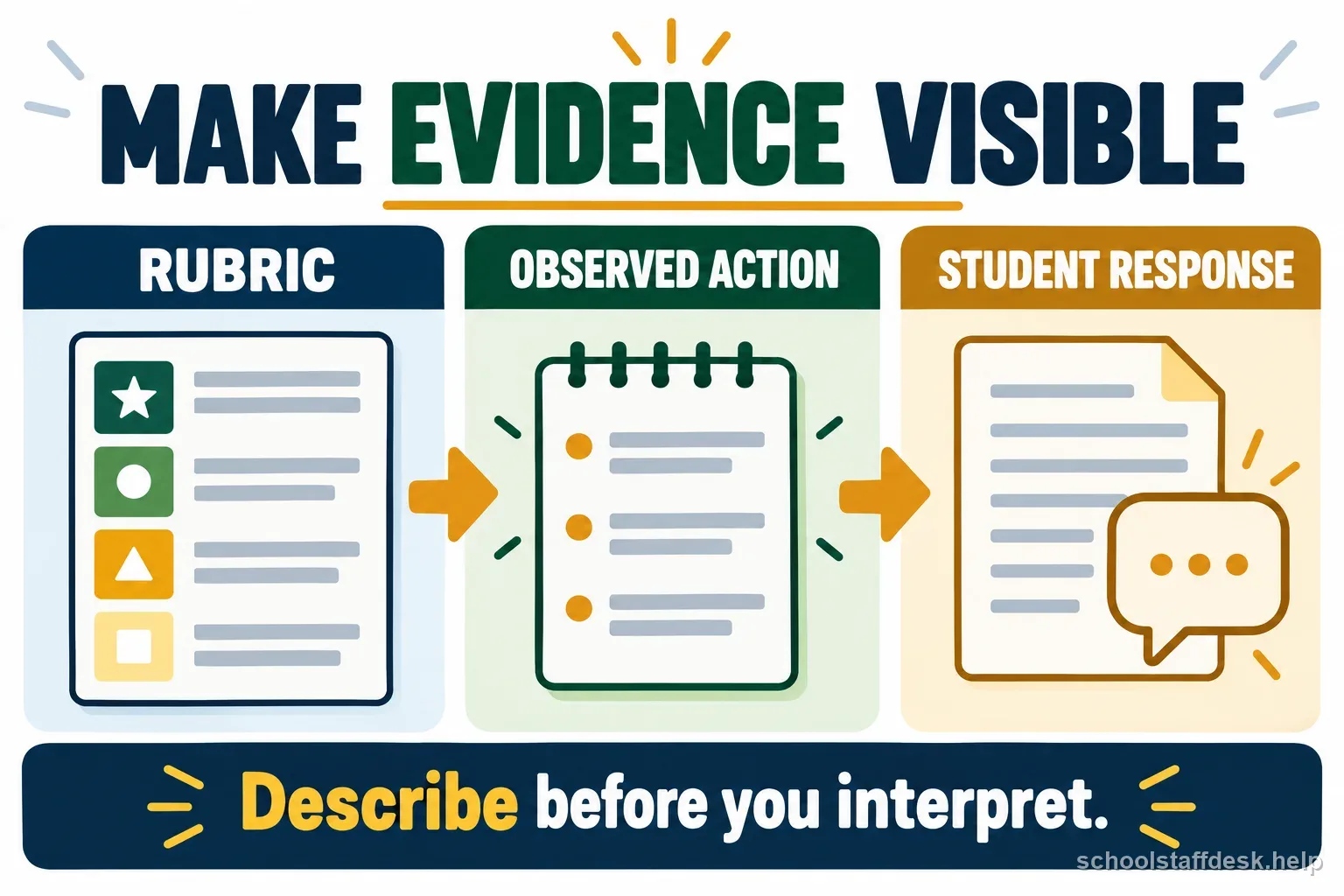
Make a small crosswalk from one relevant criterion to observable evidence. For example, connect a clear question to the student thinking it elicits, then note how you will check understanding. Keep fact separate from interpretation: ‘six students revised after feedback’ is observable; ‘the class mastered it’ needs stronger evidence. Ask which artifacts may be reviewed and how the local rubric treats student work, context, and teacher reflection.
Examples of rubric evidence to adapt to your district
| Domain | What it covers | Evidence an observer records |
|---|---|---|
| Planning and preparation | Lesson design, knowledge of content and students, assessment planning | The written plan, objectives, alignment to standards, planned checks for understanding |
| Classroom environment | Routines, expectations, respect, use of physical space | Transition times, how directions land, tone of interactions, traffic flow |
| Instruction | Explanation, questioning, feedback, student thinking, adjustment | What students are asked to do, who participates, feedback given, mid-lesson changes |
| Professional responsibilities | Records, family communication, collaboration, growth | Grade and contact logs, team participation, reflection in the post-conference |
The pre-observation conference is where you set the frame
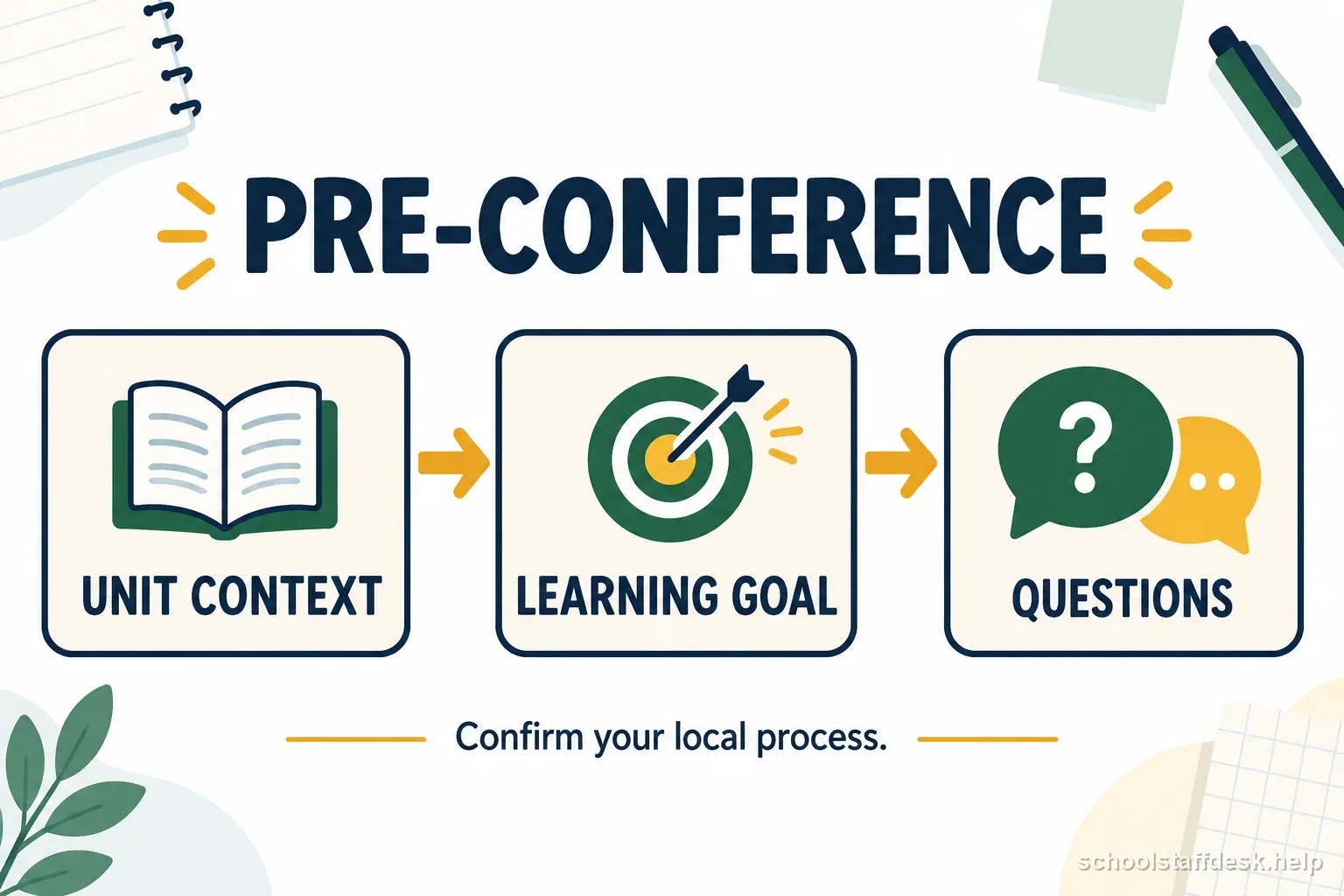
If your process includes a pre-observation conference, use it to explain where the lesson sits in the unit, what students have already practiced, and what you want them to learn. Bring the requested plan and materials. Share relevant student support context only as needed and through appropriate confidential channels.
Confirm the observation window, expected duration, rubric components, artifacts the evaluator may review, and the timeline for any post-conference or written response. If the policy does not require a pre-conference, ask how you may provide planning context and what documentation is expected.
Bring a short context note rather than a script. State the unit question, what students already know, the target for this lesson, and one likely misconception. Ask what the observer wants to see or collect, whether you may share a lesson plan afterward, and how to protect student names on work samples. If time is limited, agree on the most useful context instead of trying to explain the entire unit.
| Evidence check | Record the fact | Ask what it supports |
|---|---|---|
| Question and response | Teacher asks students to explain a step; note the response heard. | Which criterion addresses questioning or student thinking? |
| Student work | Count or describe the de-identified responses reviewed. | What does the local rubric say this evidence demonstrates? |
| Adjustment | Record the prompt, reteach, or change made after a check. | How does the evaluator connect that action to a rubric descriptor? |
During the lesson: what generates evidence
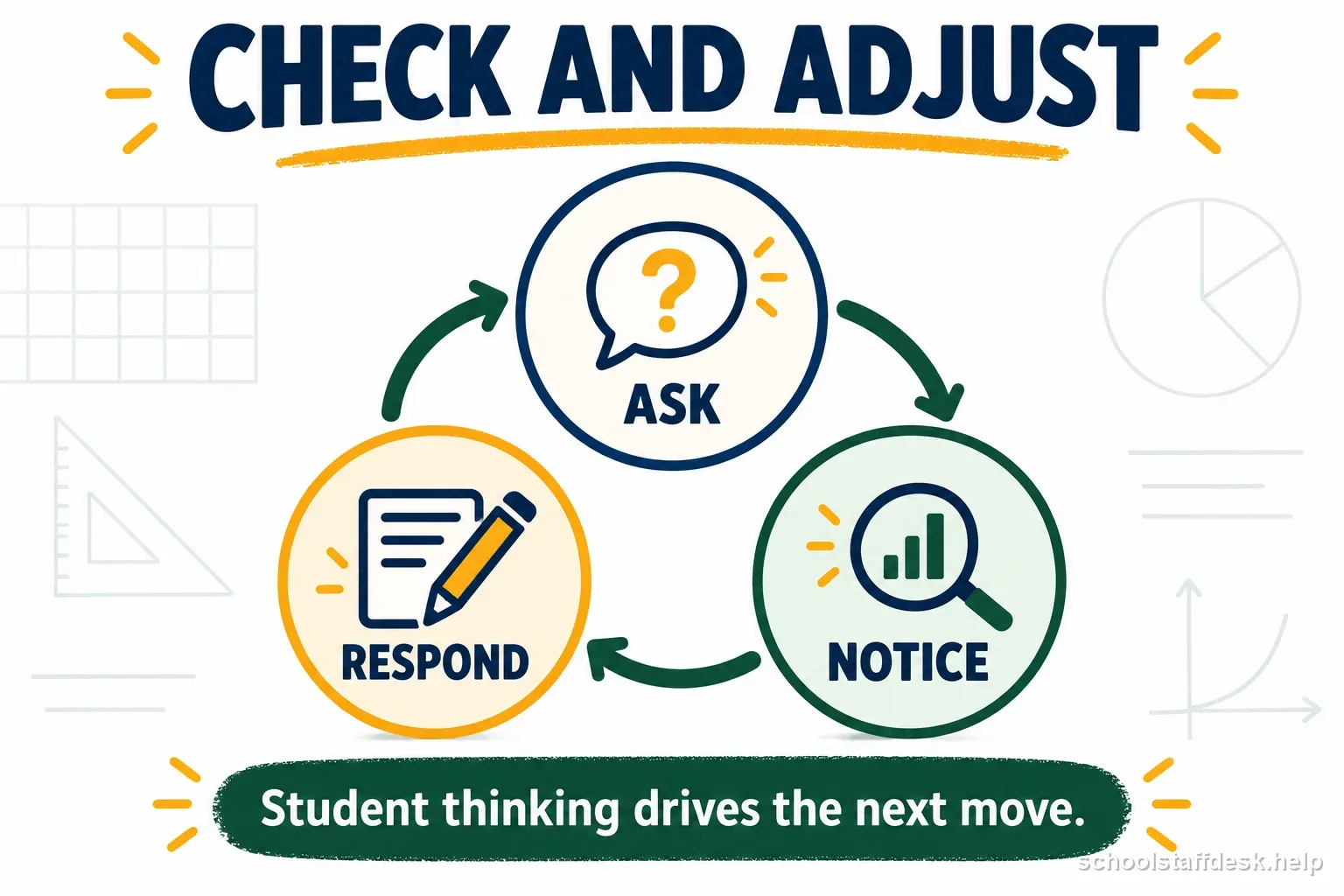
Evaluators can only score what they can observe or collect. Concrete practices that produce evidence: stating the objective and referring back to it, checking for understanding in a way that reaches more than the students who volunteer, giving clear directions and usable feedback, having students explain their thinking, managing transitions quickly, and using routines that show the room runs on a system.
Teach a lesson that fits the students and unit rather than staging an unfamiliar activity for the visit. Make your instructional choices visible through clear directions, checks for understanding, and feedback. Provide plans or handouts through the evaluator's requested channel, and avoid leaving student-identifying work or support documents where others can see them.
An illustrative 40-minute lesson might use 5 minutes to set the target, 20 for guided practice, 10 for independent work, and 5 for an exit response. That is a planning example, not an evaluation formula. During the visit, use your normal pacing and adjust when student work shows a need. The evidence is the question asked, the response seen, and the next move you make.
The post-observation conference and disagreeing well
If a post-observation conference is part of your process, review the notes and your own reflection beforehand. Ask for specific examples, connect comments to the adopted rubric, and clarify how any rating was determined. Deadlines for feedback and written responses vary, so use the local plan rather than a general timeline.
If you disagree with a factual statement or rating, identify the specific evidence and explain the context calmly. Ask how to submit a written response and whether the district has a review, appeal, or grievance procedure; note its deadline and contact your union representative or designated support person if you need help. Keep copies of the plan, notes, score, and response in an approved secure location.
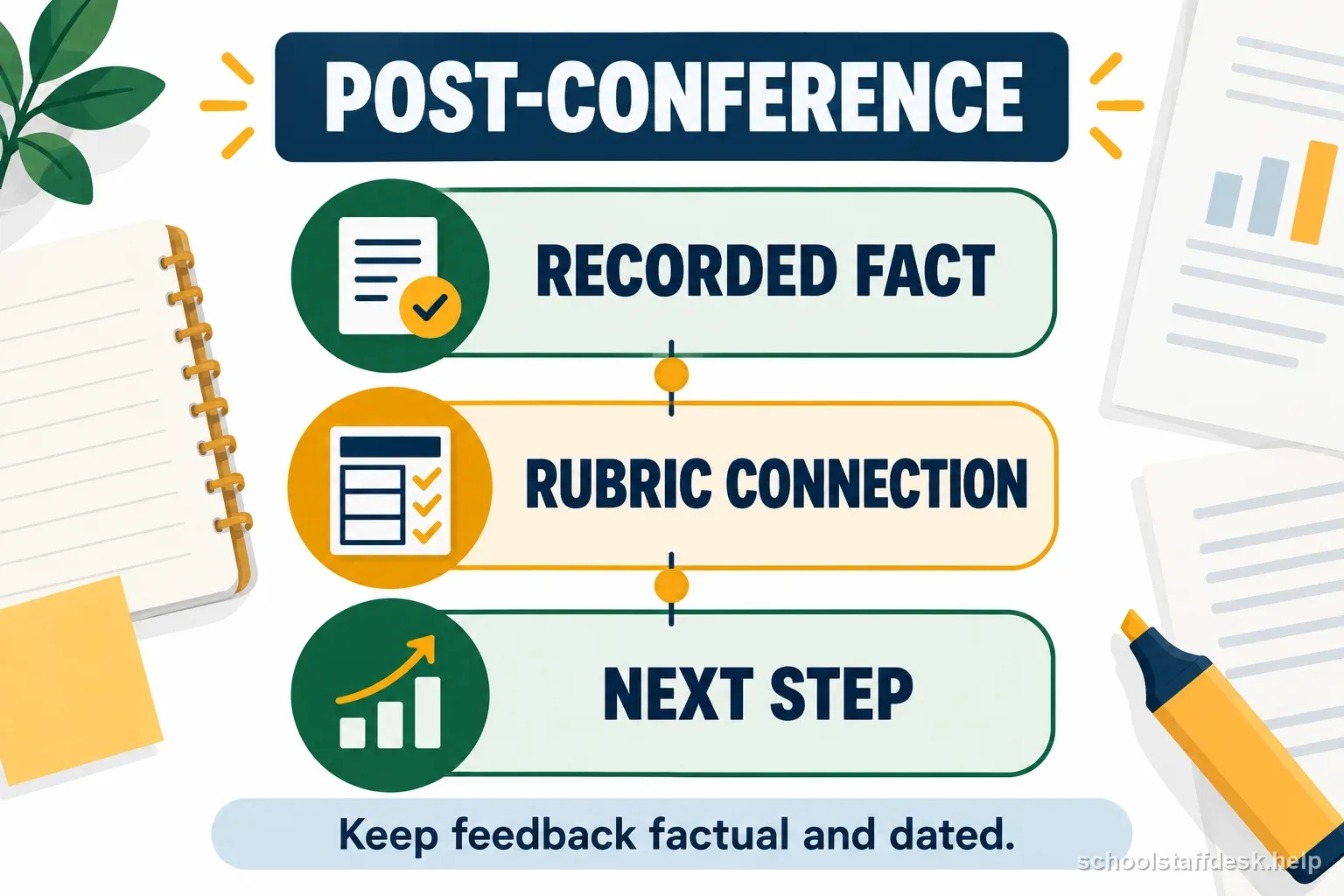
Prepare a three-column note sheet: the observer’s recorded fact, the rubric language that may apply, and context or student work to discuss. Keep the first column concrete, such as a direction, student response, or transition. In the conference, ask what evidence supports the rating and how the local process accepts a correction or written response. Save the report and any response in an approved secure location.
For example, if 18 of 24 exit responses show the target, record the count and inspect the six responses that differ before choosing a follow-up. This 18-of-24 example is an instructional snapshot, not a mastery cutoff or evaluator score. Share only de-identified work through the approved channel. Ask the observer how to correct a count or factual description if the recorded evidence differs from your copy.
Use district-approved channels for lesson artifacts and student work. Remove identifying details when policy allows, and do not keep confidential student records in a personal observation file.
Using the rating to plan, not to spiral
Use the feedback to choose a concrete next step, whether or not you agree with every rating. Ask what support, coaching, or follow-up evidence is available and when progress will be reviewed. A single observation is one data point; its weight in an overall evaluation depends on the district's plan.
If a probationary nonrenewal notice arrives, verify its separate deadline and response route. Keep the lesson plan, observation notes, rating, and any written response together in an approved secure location. If you believe the evaluation involves sex-based harassment or discrimination, review the district’s Title IX reporting steps separately from the observation response. Compare feedback across the cycle and check the policy before treating any one visit as a final employment decision.
Turn one rating into a small follow-up plan: choose the related practice, ask what support is available, identify a piece of evidence to review, and agree on when to check again. Keep the step within your role and the district’s process. If the feedback concerns a schoolwide resource or schedule, name the person who can address that condition instead of treating it as a classroom technique you alone must fix.
- Save the final report and your response in the approved location.
- Correct factual errors through the written route and by the local deadline.
- Choose one practice to work on and request the support or coaching available.
- Clarify whether the next walkthrough or observation is evaluative.
Unannounced observations, walkthroughs, and the rest of the cycle
A formal announced visit may sit alongside walkthroughs or other observations, but how those notes are recorded and used varies. Ask whether a walkthrough is evaluative, what rubric or documentation applies, and whether it contributes to a summative score.
Some systems also include self-assessment, growth goals, student-growth measures, or other evidence; these are not universal. Use the district's evaluation calendar to track conferences, written feedback, final ratings, and response deadlines. If a signature only acknowledges receipt, the policy should say so. Ask before signing if you are unsure.
At the start of the cycle, ask how walkthrough notes differ from a formal observation. Some systems use walkthroughs for coaching; others may include them in evaluation records. Confirm what is documented, who sees it, whether it affects a rating, and whether you can respond. Keep the answer with your evaluation plan so an informal visit does not surprise you later.
Sources used for this guide
- Washington Office of Superintendent of Public Instruction — Teacher and Principal Evaluation Program: Frameworks and Rubrics
- New Jersey Department of Education — Educator Evaluation: Teacher Practice
- United Federation of Teachers — Your First Formal Observation
Rules can change. Use these sources as a starting point and confirm any state, district, student-plan, employment, licensing, or retirement requirement with the agency or team that governs your situation.
Questions school staff ask about this situation
Should I teach a special lesson for the observation?
Teach a lesson that fits the class and unit. Use the observation to show your usual practice clearly through directions, checks for understanding, and feedback rather than staging an unfamiliar activity.
What is the pre-observation conference for?
If required or offered, use it to provide unit context, learning goals, relevant instructional choices, and requested materials. Confirm the observation window, rubric criteria, and follow-up process.
What if I disagree with a rating?
Identify the specific rating or factual statement, provide relevant evidence or context, and ask how to submit a written response. Follow the district's review or appeal steps and deadlines, which vary by local policy and agreement.
Is a middle rating on my first observation a bad sign?
A rating must be interpreted under your district's rubric and evaluation rules. Ask how it affects the overall evaluation and use the feedback to identify support and next steps.
How should I take notes during the observation?
Record concrete actions, student responses, and context separately from your interpretation. Follow district rules for notes and student work, and do not place identifiable student information in personal files.