
Start with an instructional purpose and the approval route
Write one or two learning goals and explain how the destination supports them. Confirm the proposed date with the principal or designated approver before contacting families or promising a reservation. Check the district calendar for testing, transportation limits, building events, substitute coverage, and any advance submission deadline. A field trip that has a clear purpose is easier to schedule and evaluate than a destination chosen first and justified later.
Find the district's current field-trip procedure and determine which form, signatures, insurance review, and budget approval are required. Local rules can specify notice periods, chaperone ratios, destination restrictions, or transportation vendors. Record who owns each approval and when it is due. Do not treat an old folder or another school's practice as current policy; confirm the version and keep the final approval with the trip file.
Build the schedule backward from the return time
Confirm the destination's opening hours, reservation, arrival instructions, accessibility, meal arrangements, restroom access, and emergency contact. Estimate travel time both ways and include loading, attendance counts, traffic margin, and a buffer before dismissal. Share the schedule with the office, transportation staff, families, and any colleagues whose classes students will miss.
Make a timeline that names the responsible adult at each transition: classroom departure, bus loading, arrival, group movement, lunch, headcount, departure, and return. Add a backup contact method if a phone has no signal or the group separates. Ask the venue about late arrival, closure, severe weather, and cancellation rules before the school commits money or communicates a final plan.
Coordinate transportation and adult supervision
Use the district-approved transport method and verify pickup location, vehicle capacity, accessibility, driver contact, route, and required passenger records. Do not arrange private-car transportation unless the school has approved that method and explained its requirements. Confirm who is authorized to drive, how vehicle and passenger details are recorded, and which staff member is responsible for reporting a delay or breakdown.
Assign adults to named groups and clarify how supervision works during movement, meals, restrooms, and free-choice portions of the visit. Share a roster with only the information each adult needs. Establish a headcount routine at every transition and decide who carries the master roster, emergency contacts, and approved first-aid supplies. If a chaperone cancels, know who may approve a replacement and how the groups will be reassigned.
Plan student access and health support early
Ask the responsible school teams what arrangements are needed for students to participate meaningfully and safely. Coordinate early with the school nurse or designated health professional about medication, care plans, emergency contacts, food, mobility, or other supports under local procedures. Do not ask a classroom teacher or volunteer to take on a medical task without the authorization and training required by the district.
Check the route, rest areas, seating, sensory conditions, and activity format for access barriers. If the destination or transport presents a barrier, raise it before finalizing the plan and ask the appropriate staff about alternatives or supports. Keep personal health information limited to authorized staff who need it to carry out assigned responsibilities. Participation decisions should follow district policy and applicable law, not a last-minute assumption by one chaperone.
Give families clear instructions and collect required forms
Use the school's approved communication channel and tell families the purpose, date, departure and return windows, clothing or equipment needs, meal plan, cost if any, and whom to contact with questions. State the form deadline and the procedure for returning it. Follow the district's consent and payment rules, including how families can ask about financial assistance or alternatives if a fee is a concern.
Make a final list of permission forms and contact details using the school's secure process. Track missing responses without exposing student information in a public roster or group message. Confirm which information is appropriate to share with chaperones and what should remain with designated staff. Before leaving, verify that every student has the required permission or other documented status according to local policy.
Prepare for changes and emergencies
Identify the person who can cancel, delay, or alter the trip and the method for reaching that person. Review the district's emergency procedures, destination emergency exits, reunification plan, severe-weather plan, and process for contacting the office. Decide what happens if a student becomes ill, a group is delayed, a transportation issue occurs, or the destination closes unexpectedly.
Give chaperones a concise contact sheet and clear instructions on when to call emergency services, the school office, or the trip lead. Keep the school's emergency information secure and return it according to policy. Do not promise that a signed permission form replaces supervision or an approved safety process. After the trip, report incidents through the district's established channel and preserve the required records.
Trip lead handoff checklist
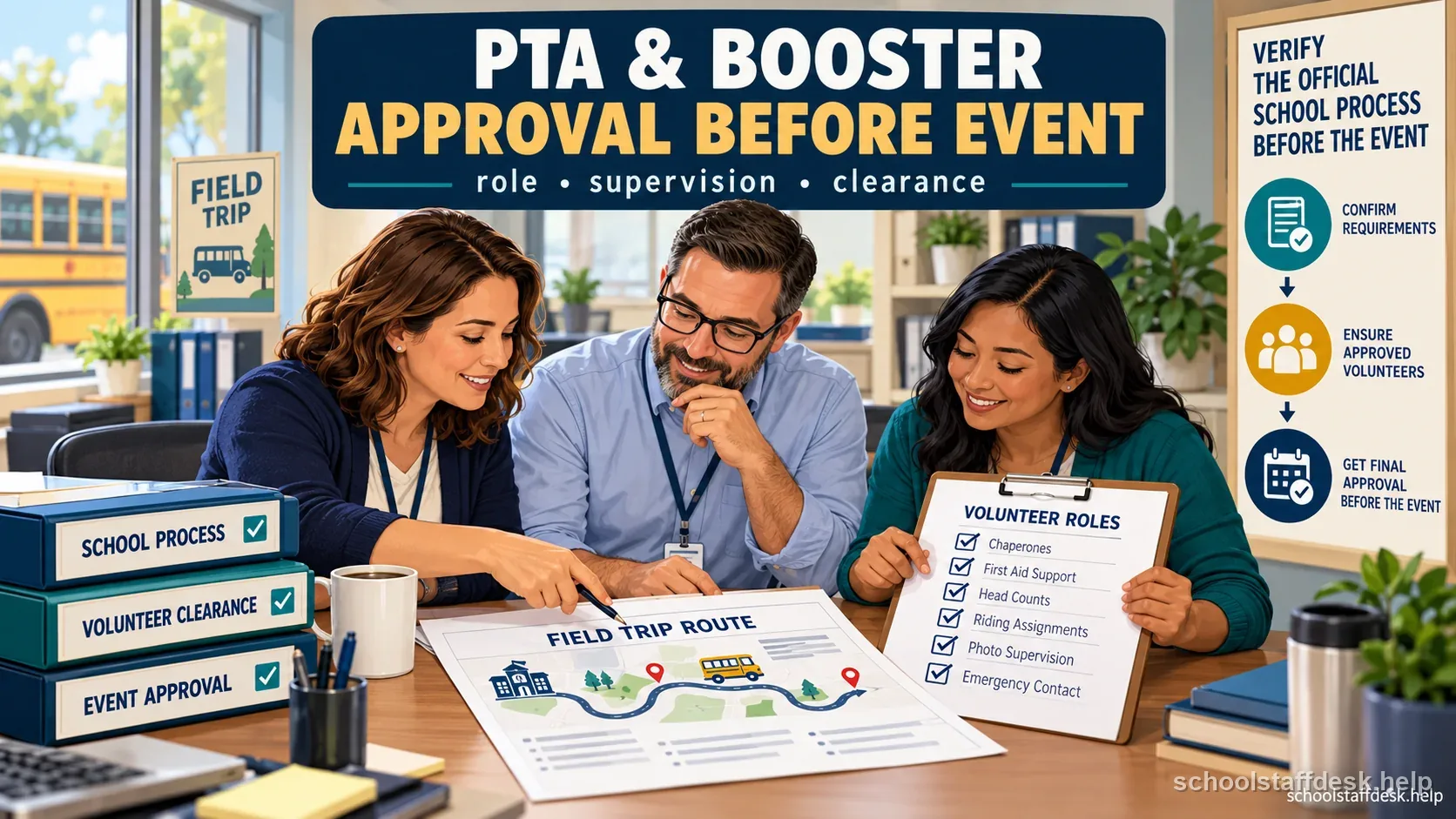
- Get current local approval and transportation requirements before announcing the trip.
- Confirm destination logistics, route, schedule buffer, and a named decision-maker for changes.
- Assign chaperone groups, headcount points, contact method, and roster responsibilities.
- Coordinate required health, access, and communication supports with the authorized school staff.
- Complete return, incident, receipt, and record-storage steps after the trip.
Close out the trip and improve the next one
On return, confirm every student has been released through the usual dismissal process and notify the office when the group is back. Reconcile receipts, attendance, transportation changes, and any incident report. Return borrowed supplies and student records to their assigned locations. A short closeout prevents an incomplete roster or unresolved payment from carrying into the following week.
Ask students what they learned and compare the outcome with the original goal. Note what worked in the timing, group size, site access, and adult communication. Record one or two process changes for the next trip and store them with the current district forms. Keep required records for the period the district specifies; avoid retaining personal health or family information longer than policy allows.
Sources used for this guide
- National Association of School Nurses, School-Sponsored Trips and Student Health Needs
- U.S. Department of Education, Protecting Student Privacy FAQs
Rules can change. Use these sources as a starting point and confirm any state, district, student-plan, employment, licensing, or retirement requirement with the agency or team that governs your situation.
Questions school staff ask about this situation
How far in advance should a school field trip be approved?
Use the district's current procedure. Approval windows vary by school system and destination; confirm the deadline before making a reservation or telling families the trip is final.
Can parents drive students on a field trip?
Do not arrange private-car transportation unless the district has approved it and provided the applicable requirements for drivers, vehicles, consent, and records.
Who should coordinate student medication during a trip?
Coordinate with the school nurse or other authorized health professional under district procedures. Staff and volunteers should not assume a medical duty without required authorization and training.
What should chaperones receive before departure?
Give them assigned groups, headcount and transition routines, the school contact, emergency instructions, and only the student information they need for their role.