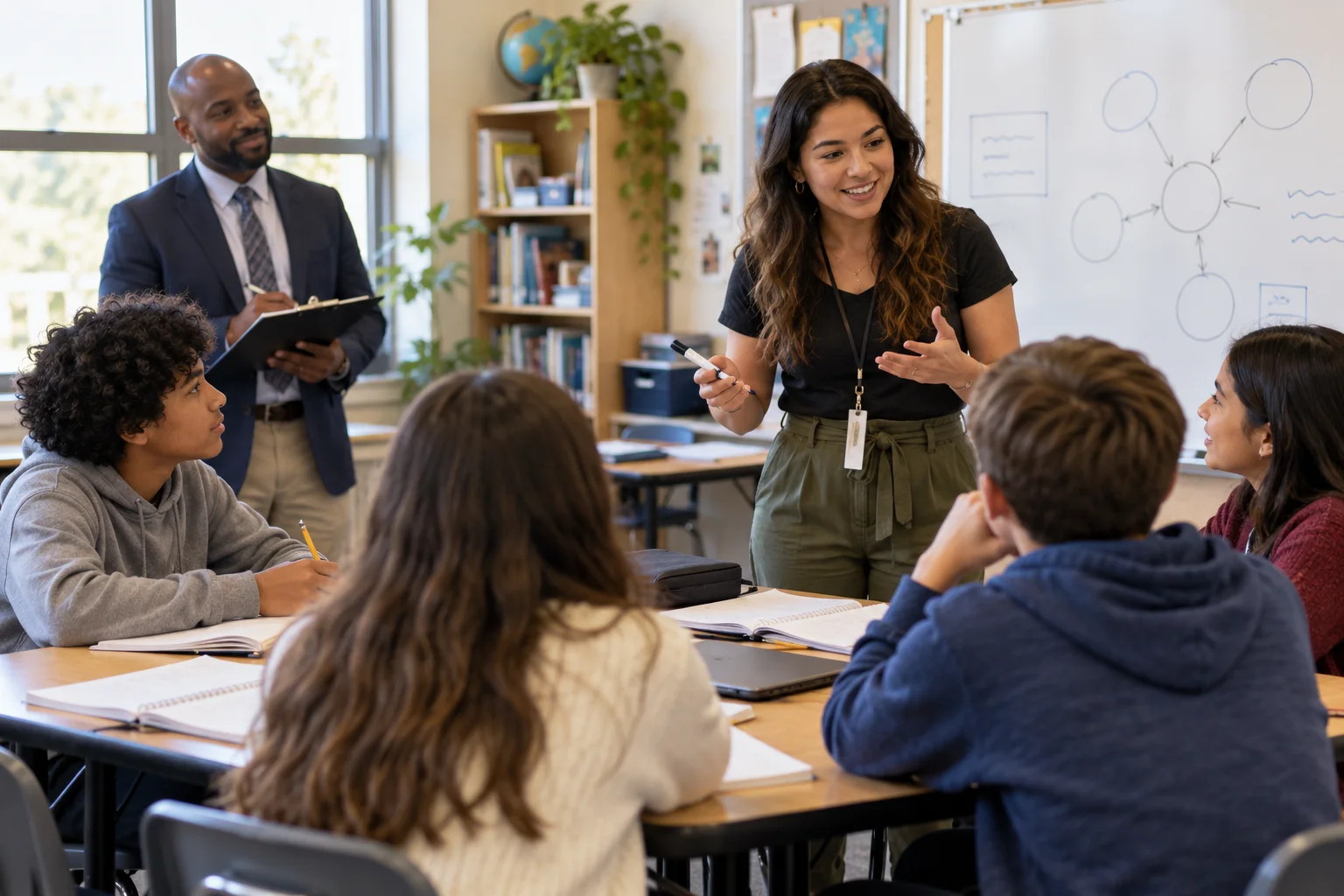
Clarify the assignment before writing a plan
Ask the hiring contact what students have recently learned, what materials will be available, how many students will attend, and whether the lesson is expected to connect to a specific standard or unit. Confirm the room setup, technology, time limit, and whether the observer wants a written plan. Those details let you prepare for the actual task rather than guessing at a school's curriculum.
If the school gives you a standard or topic, identify the one small piece students can learn in the available time. Do not try to teach an entire unit in twenty minutes. If the prompt is broad, send one concise clarification question and propose a reasonable boundary. Keep a copy of the instructions and bring a low-tech backup in case the display, network, or classroom device is unavailable.
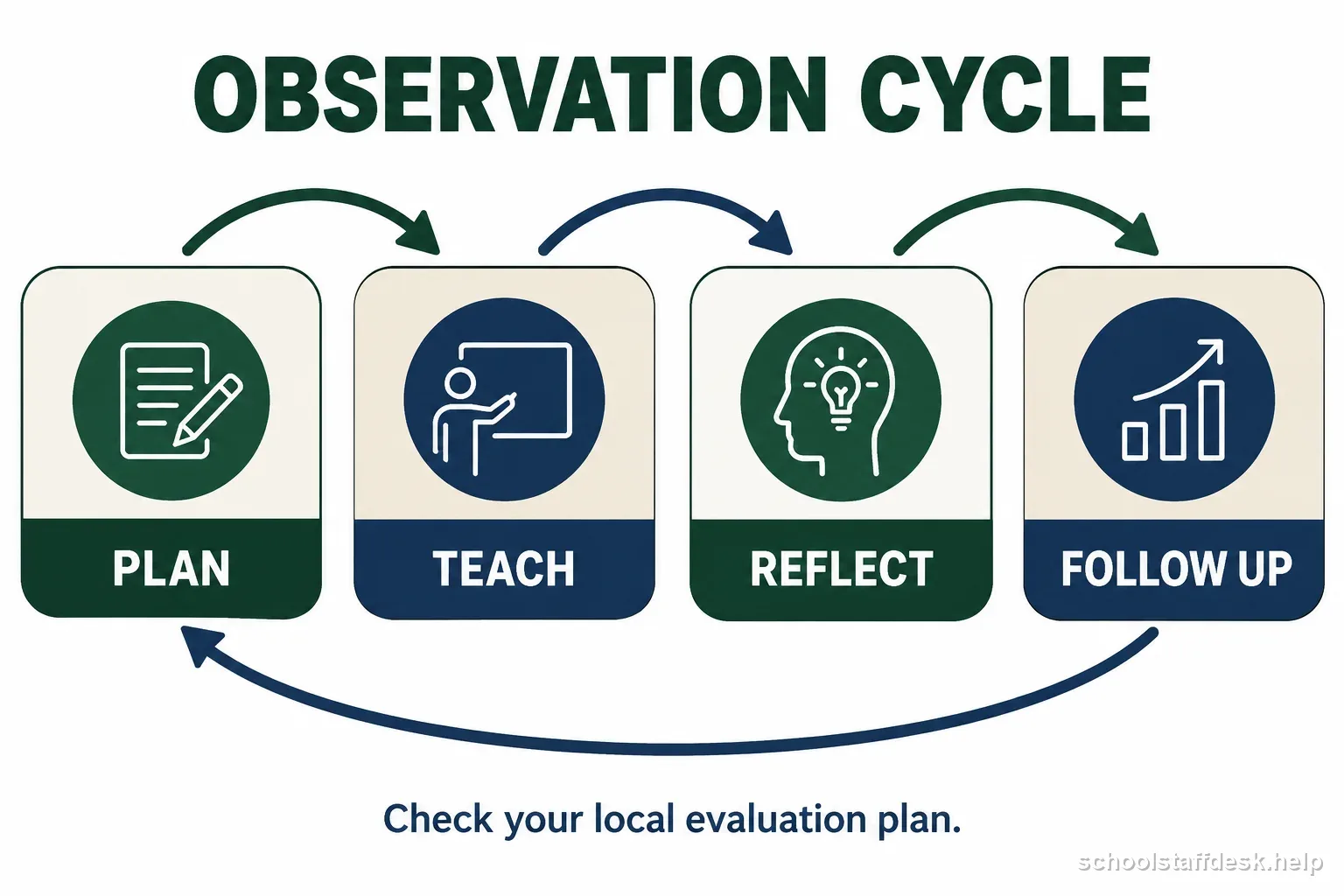
Write one measurable objective and a visible success check
Describe what students will do by the end, using an action you can observe: sort examples, explain a choice with evidence, solve a problem and show a strategy, or revise a sentence using a rule. Avoid objectives such as “understand fractions” unless you specify what understanding will look or sound like. A narrow target makes the lesson easier to teach and gives the observer evidence to discuss.
Choose a quick check that matches the objective. A one-question response, annotated example, partner explanation, or short exit prompt can show whether students are ready for the next step. Decide in advance what answers would count as secure, partly secure, or still developing. This need not become a formal grading system; it is a way to show that your next move depends on what students actually demonstrate.
Plan a short arc instead of a string of activities
Use a simple sequence: connect to prior knowledge, model one example, let students try with support, then ask them to apply the idea or explain their reasoning. Put approximate minutes beside each part and reserve time for students to respond. If the lesson is ten minutes, one rich task and a clean check are more useful than four rushed activities.
Prepare the directions in student-facing language and include the materials students need before the task begins. Consider where a misconception may appear and what prompt could help without giving away the answer. A strong mini-lesson makes the thinking visible: students should be doing some of the intellectual work, not only watching the candidate talk. Use a board, manipulatives, or a simple handout when these help the goal.
Build participation and access into the task
Plan how every student can take part: individual think time, a brief written response, a partner explanation, or a choice of examples. Do not assume that a few eager volunteers represent the whole group. Use a neutral invitation to hear from more students and give them a moment to prepare. The observer can then see how you invite participation and respond to different answers.
Ask the school in advance whether there are known access needs or classroom routines you should follow, and use the accommodations or materials provided by the hiring team. Keep the task accessible through clear directions, visible steps, and more than one way to express thinking. Do not request confidential student details you do not need. If a student needs additional time or a different prompt, respond calmly and keep the objective steady.
Check understanding and adjust in real time
Listen for the reasoning behind an answer, not only whether it is correct. If students show a common misunderstanding, pause and model a contrasting example, ask a smaller question, or invite students to compare two approaches. Say what you noticed in plain language. An adjustment is not a failure of the plan; it shows that you are attending to evidence from the room.
Keep one next step ready for students who finish quickly and one scaffold for students who need more support. These should still connect to the same objective. Avoid adding a second unrelated task simply to fill time. A brief check at the end can help you decide whether the lesson reached its goal and gives you concrete evidence to mention during the debrief.
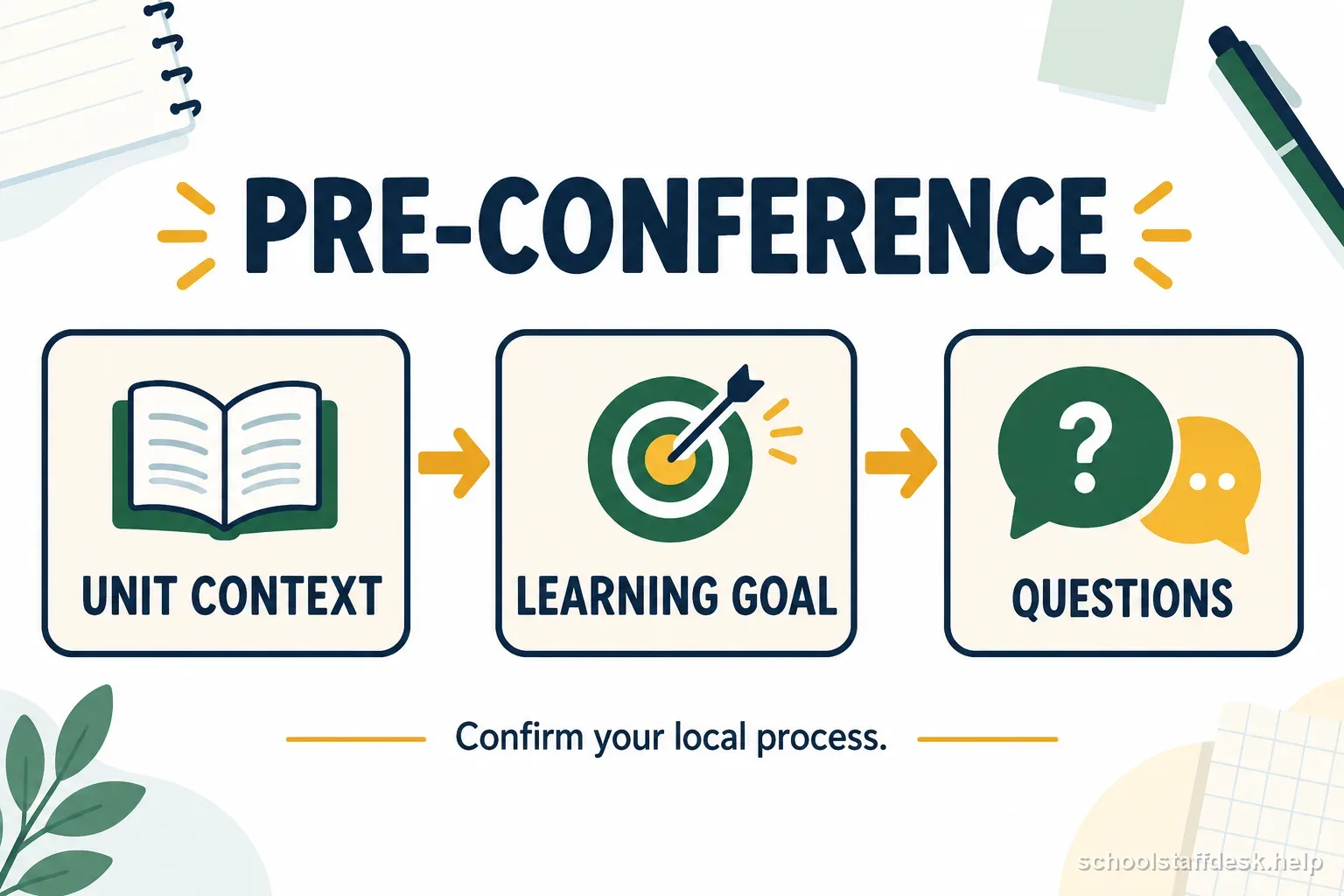
Rehearse logistics and protect the limited time
Practice the opening, directions, transitions, and closing aloud with a timer. Rehearse with the materials you will bring and check that any links or slides open without a personal login. Put printed copies, writing tools, and a backup version in one folder. Arrive early enough to learn where to stand, where students enter, and how the room technology works.
Use a small clock cue rather than watching the observer. If a discussion runs long, preserve the learning check and shorten an example or transition. Do not rush students through the part where they think. If you finish early, use the prepared extension or ask students to explain their strategy; do not improvise an unrelated game that obscures the lesson's purpose.
Demo-lesson preparation card
- Confirm the prompt, student group, time limit, room, materials, standard, and evaluation criteria.
- Write one observable objective and a check that can show what students learned.
- Prepare a low-tech backup and rehearse the directions with a timer.
- Plan one scaffold, one extension, and one likely misconception.
- After the lesson, describe student evidence and one specific next step.
Use the debrief to reflect on evidence and next steps
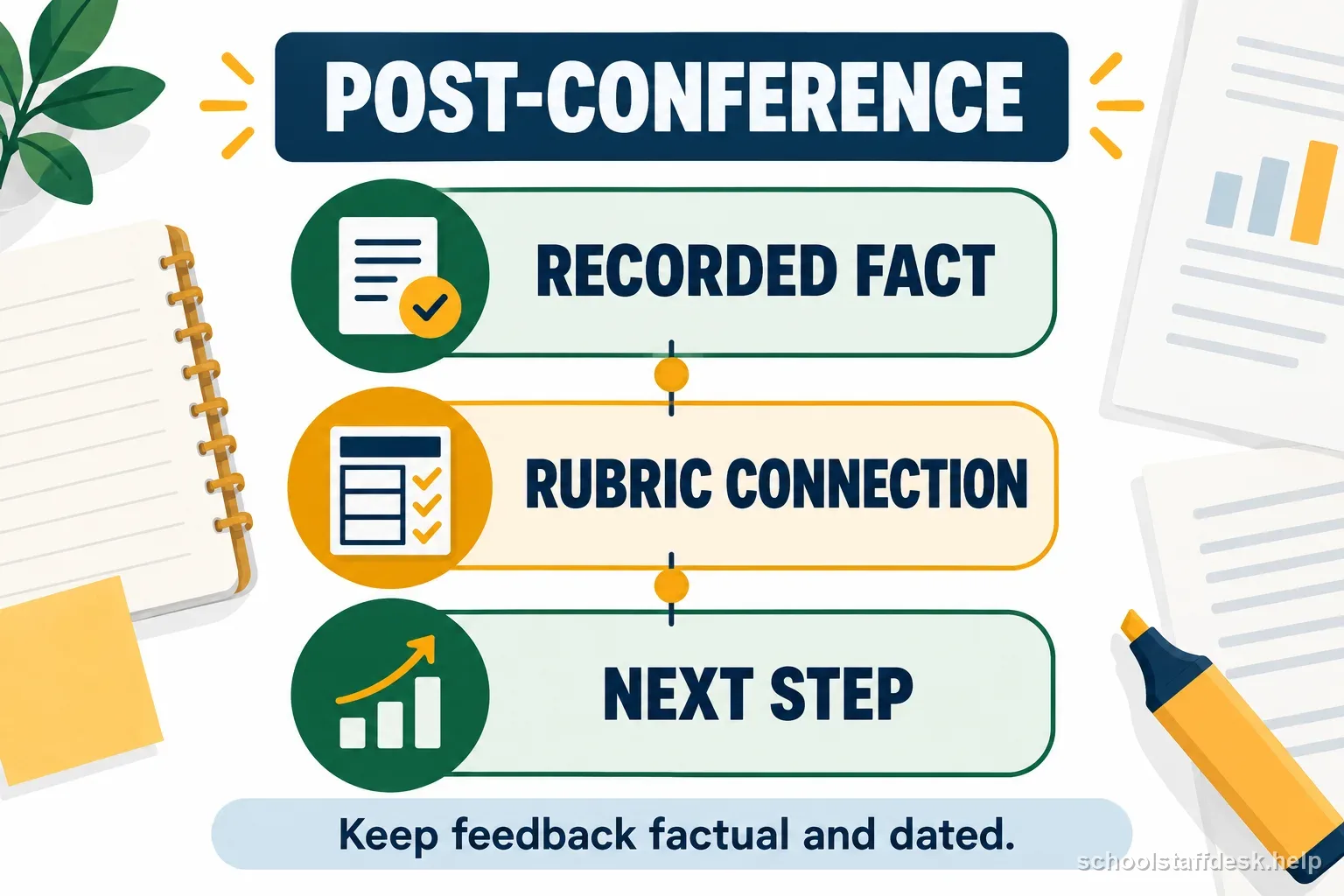
After teaching, state the objective, the evidence you collected, and one adjustment you made. Name what students did rather than making a broad claim that the lesson “went well.” You might explain that several students could sort examples but needed a prompt to justify their categories. This shows reflection grounded in the work that happened.
If the observer asks what you would change, choose one specific next move and explain why. You can also ask how the lesson connected to the school’s curriculum or what the team would expect students to learn next. Do not treat the demo as a promise that every future class will look identical. It is a limited sample; ask what other evidence the hiring team uses to make its decision.
Sources used for this guide
- U.S. Department of Education, Research-Based Practices for Recruiting and Hiring Highly-Effective Teachers
- U.S. Department of Education LINCS, Effective Lesson Planning
Rules can change. Use these sources as a starting point and confirm any state, district, student-plan, employment, licensing, or retirement requirement with the agency or team that governs your situation.
Questions school staff ask about this situation
How long should a teacher demo lesson be?
Use the time limit the school provides. If none is specified, ask the hiring contact rather than assuming. Design a narrow objective that fits the allotted minutes.
Should I teach a full lesson or just a mini-lesson?
Follow the prompt. A short demonstration usually works best with one reachable target, a focused student task, and a check for understanding instead of a compressed full unit.
What do observers look for in a demo lesson?
Hiring teams may use different criteria. Common evidence includes clear directions, accurate content, student participation, checks for understanding, responsive adjustments, and reflection. Ask for the local rubric.
What if the students do not respond as expected?
Pause, use a smaller prompt or model, and adjust while keeping the objective visible. In the debrief, explain what you noticed and what evidence informed your next move.